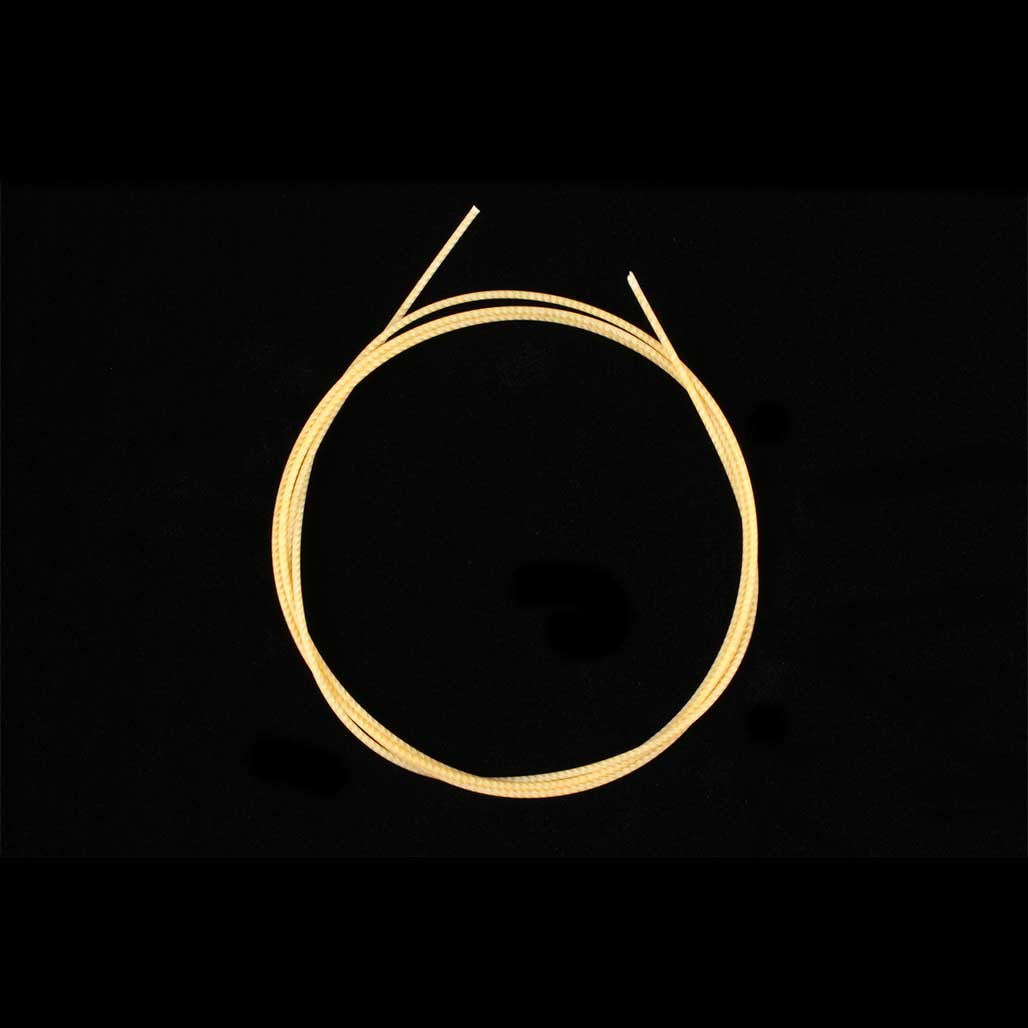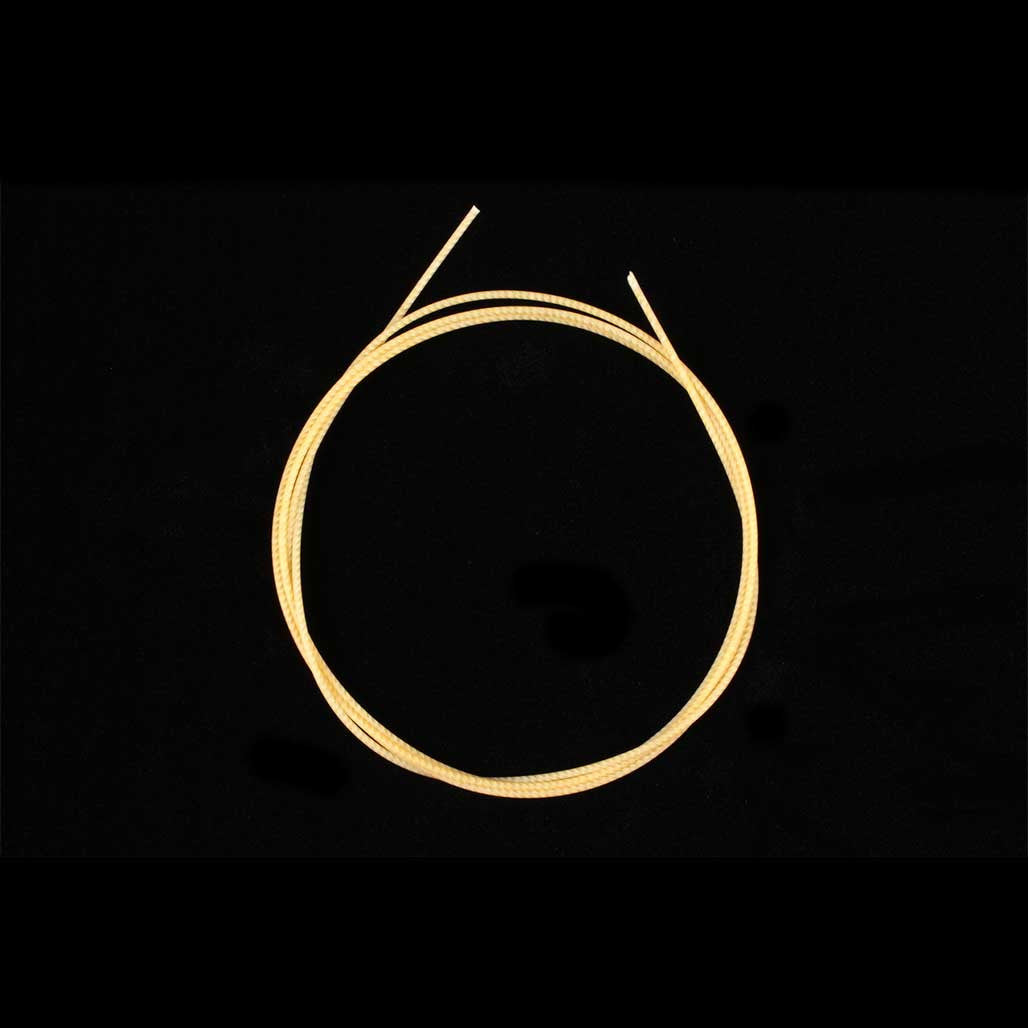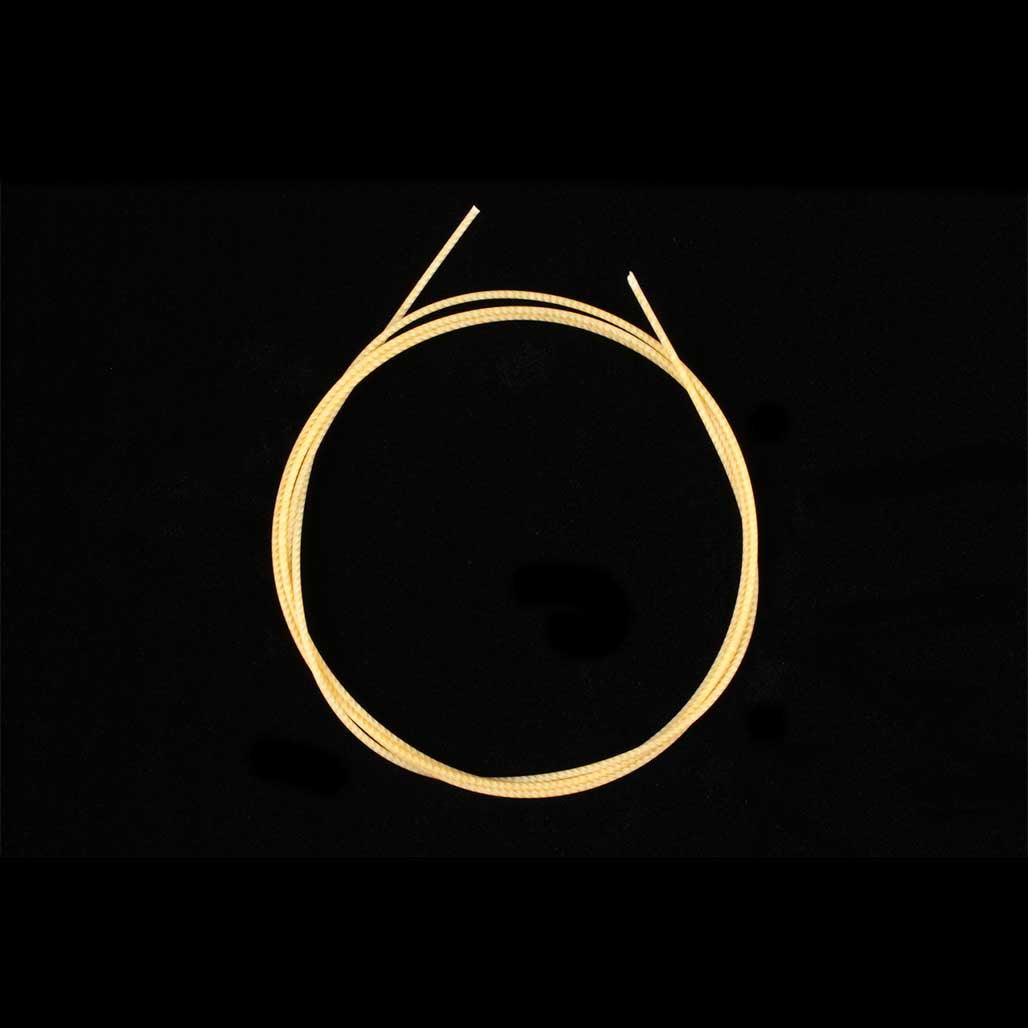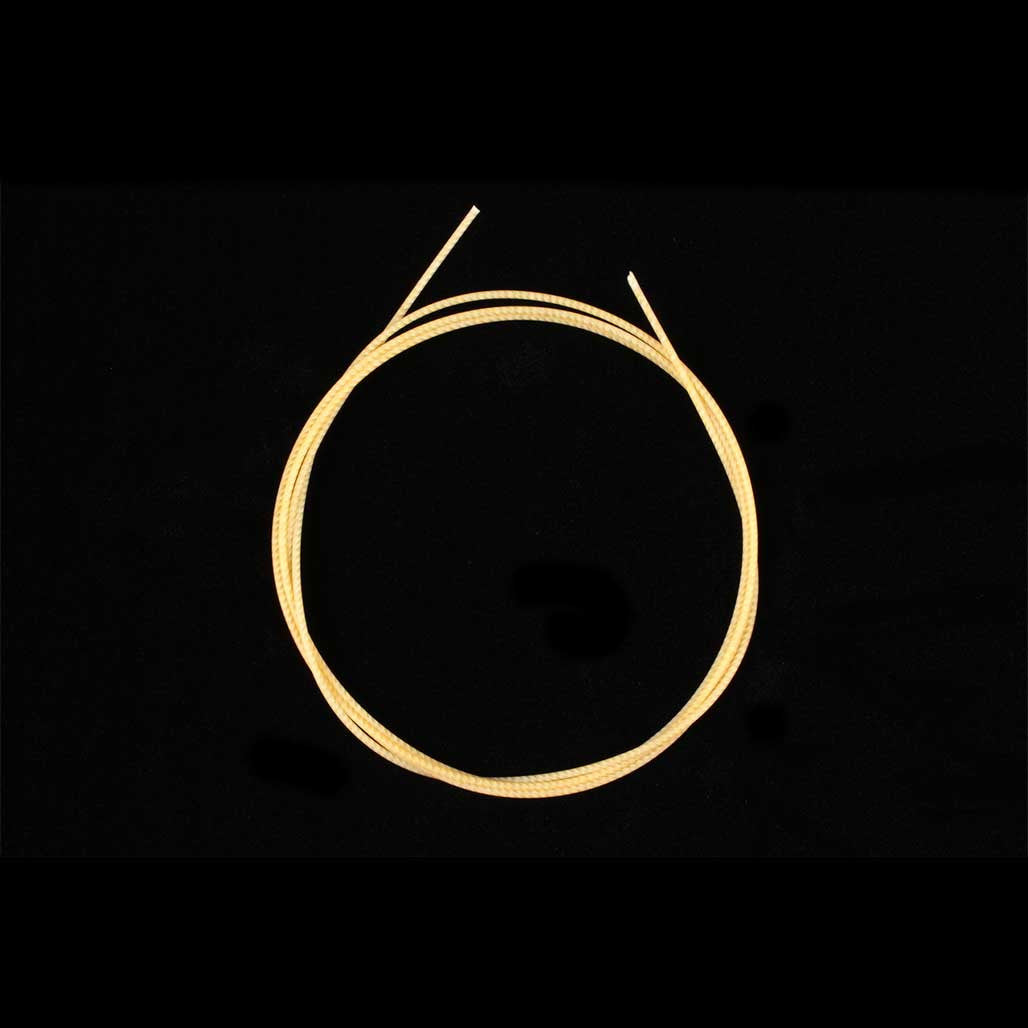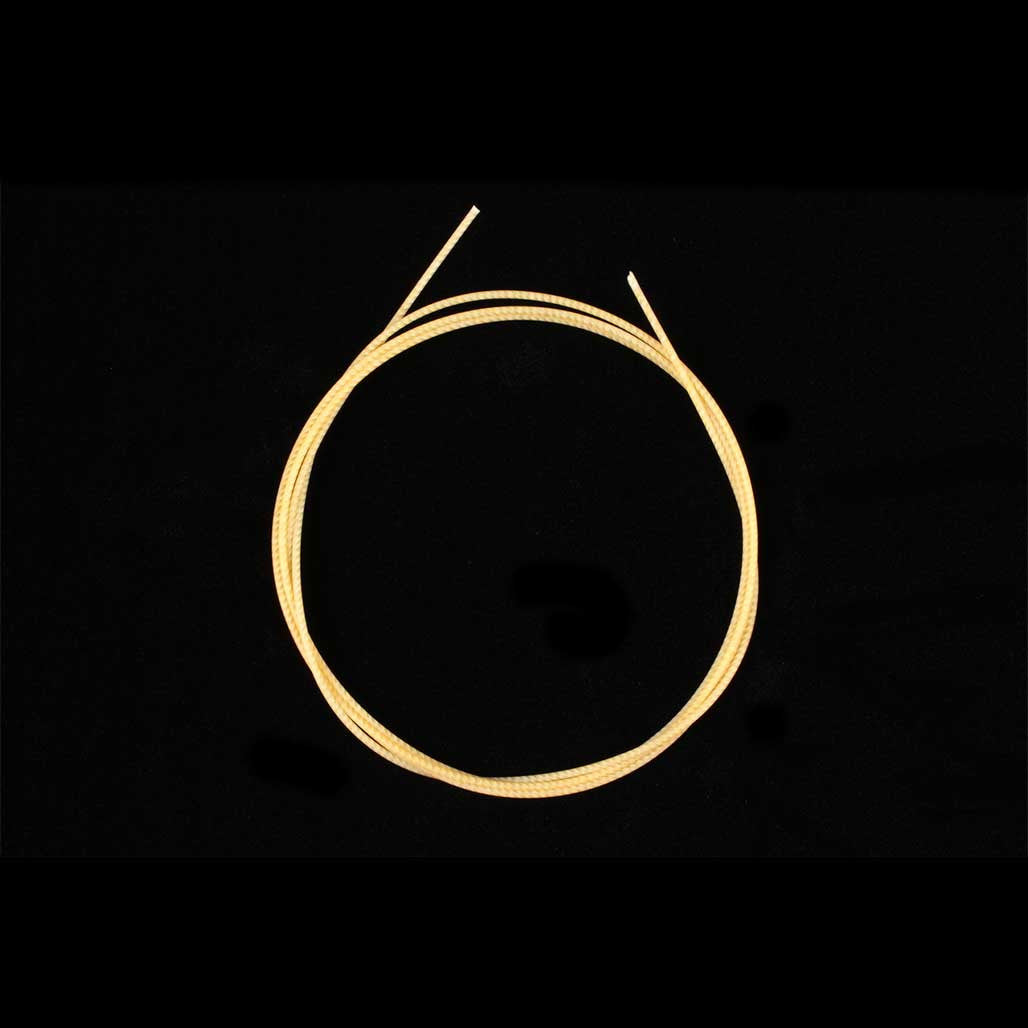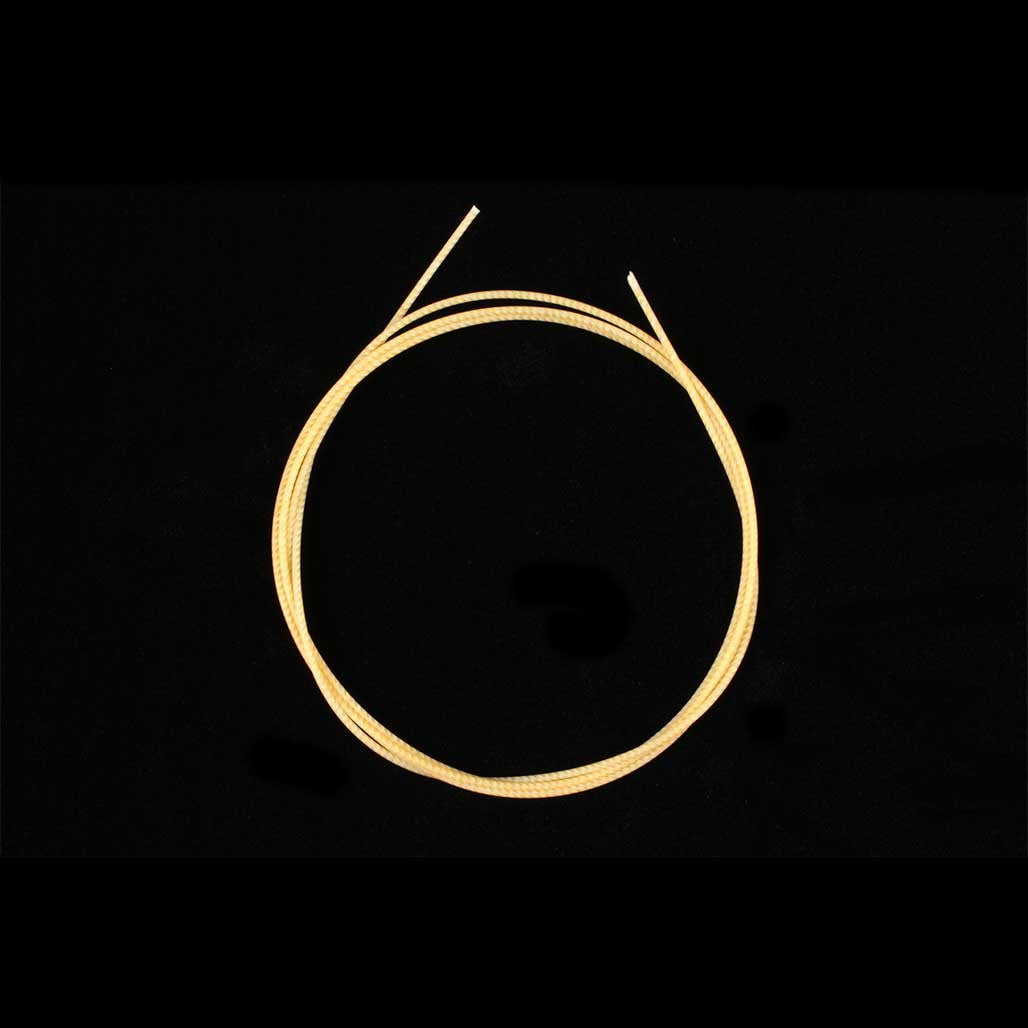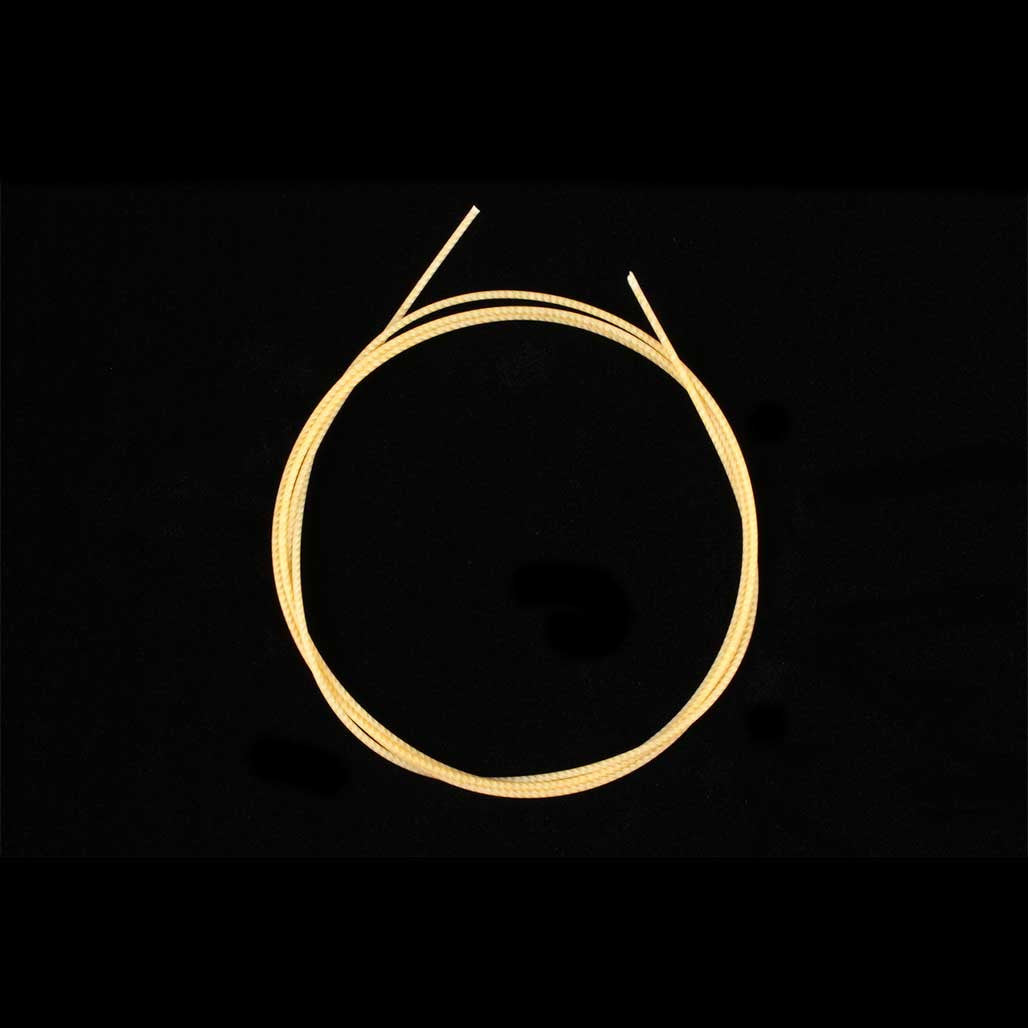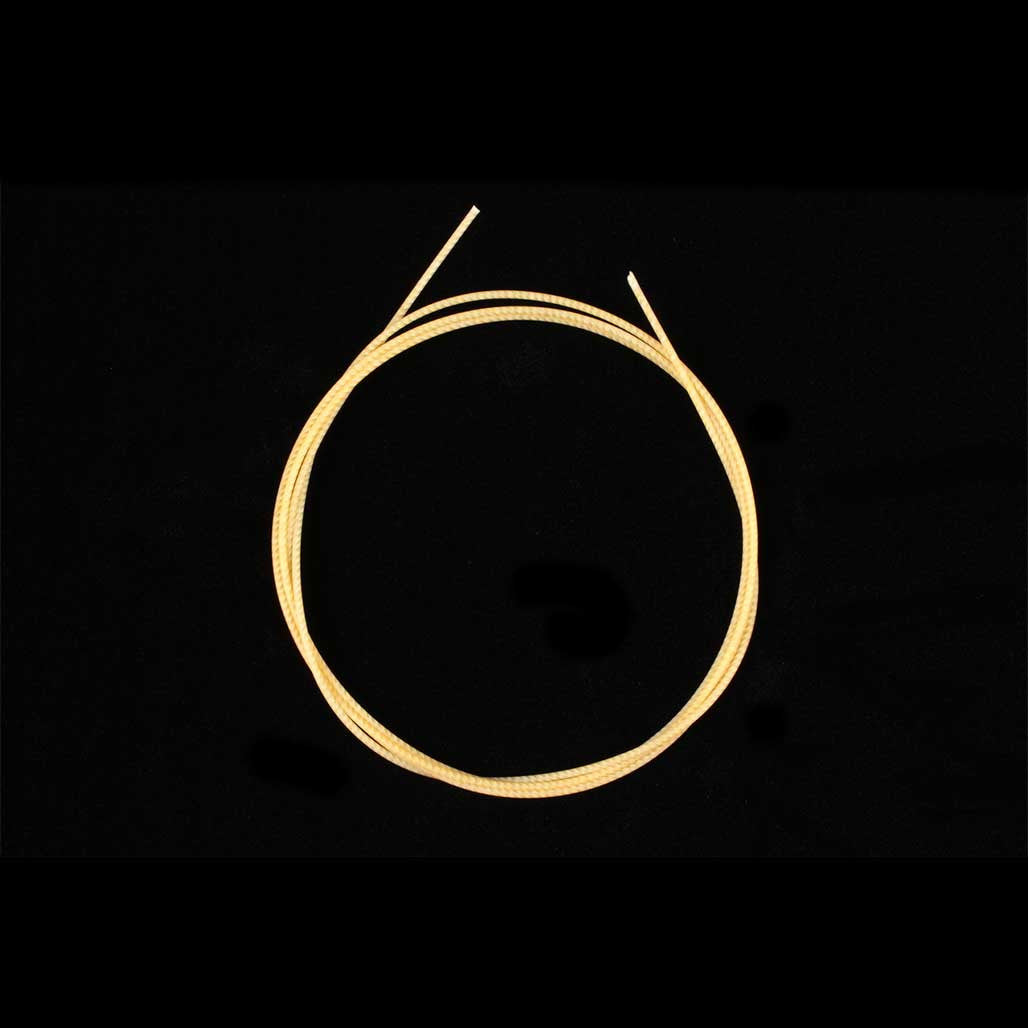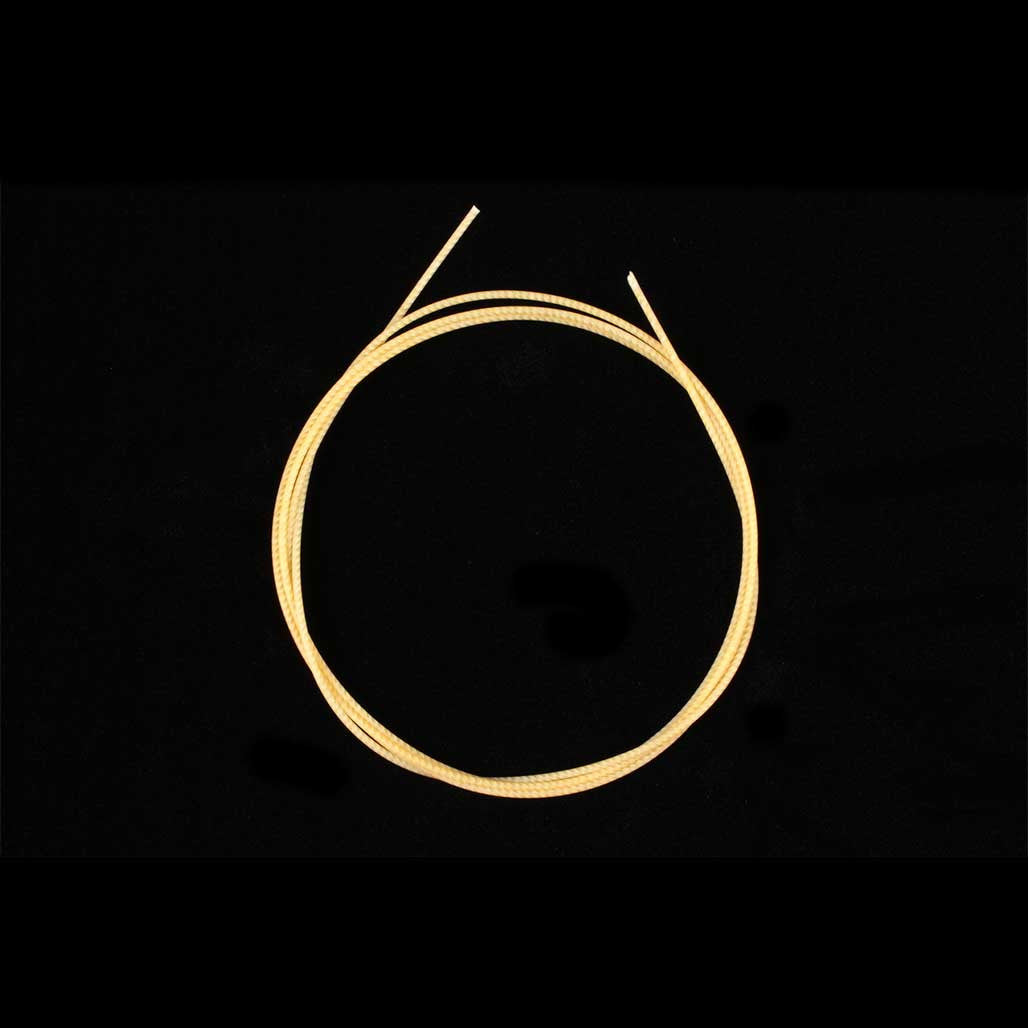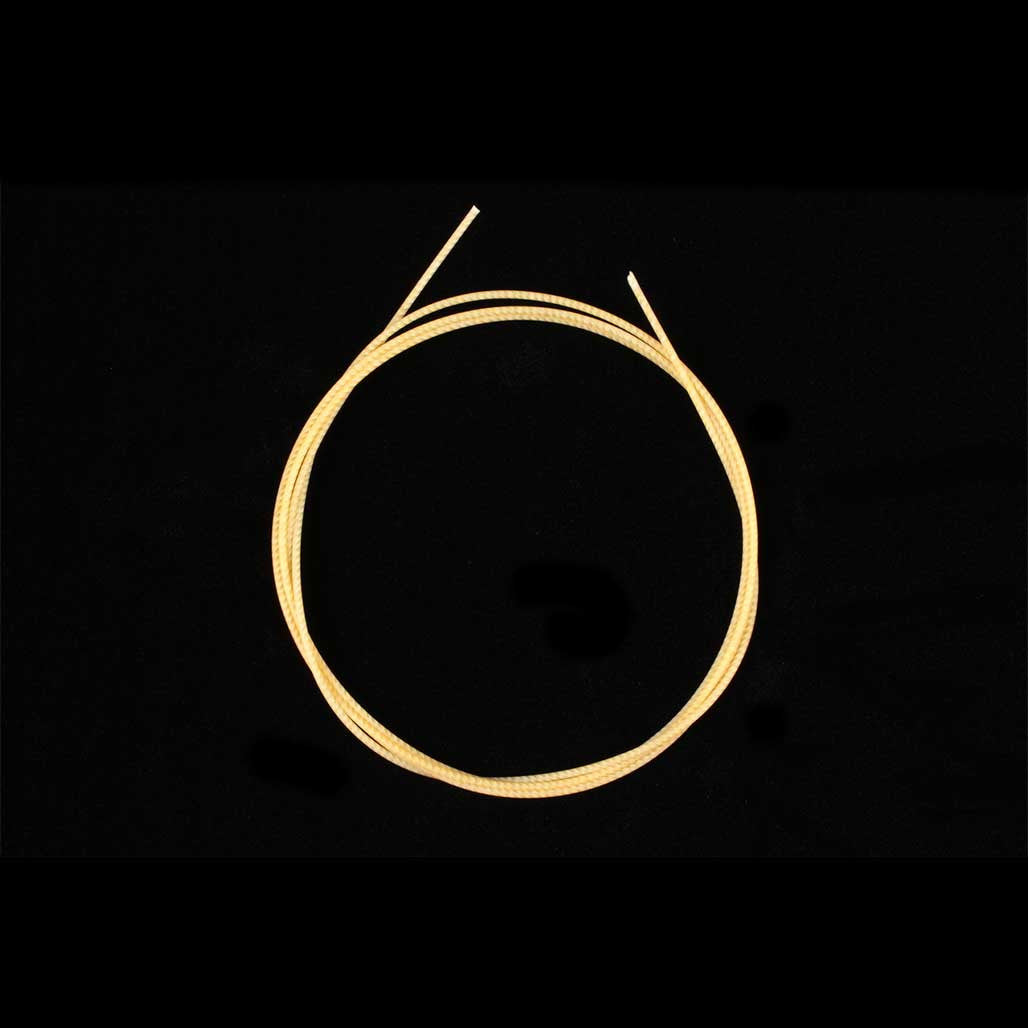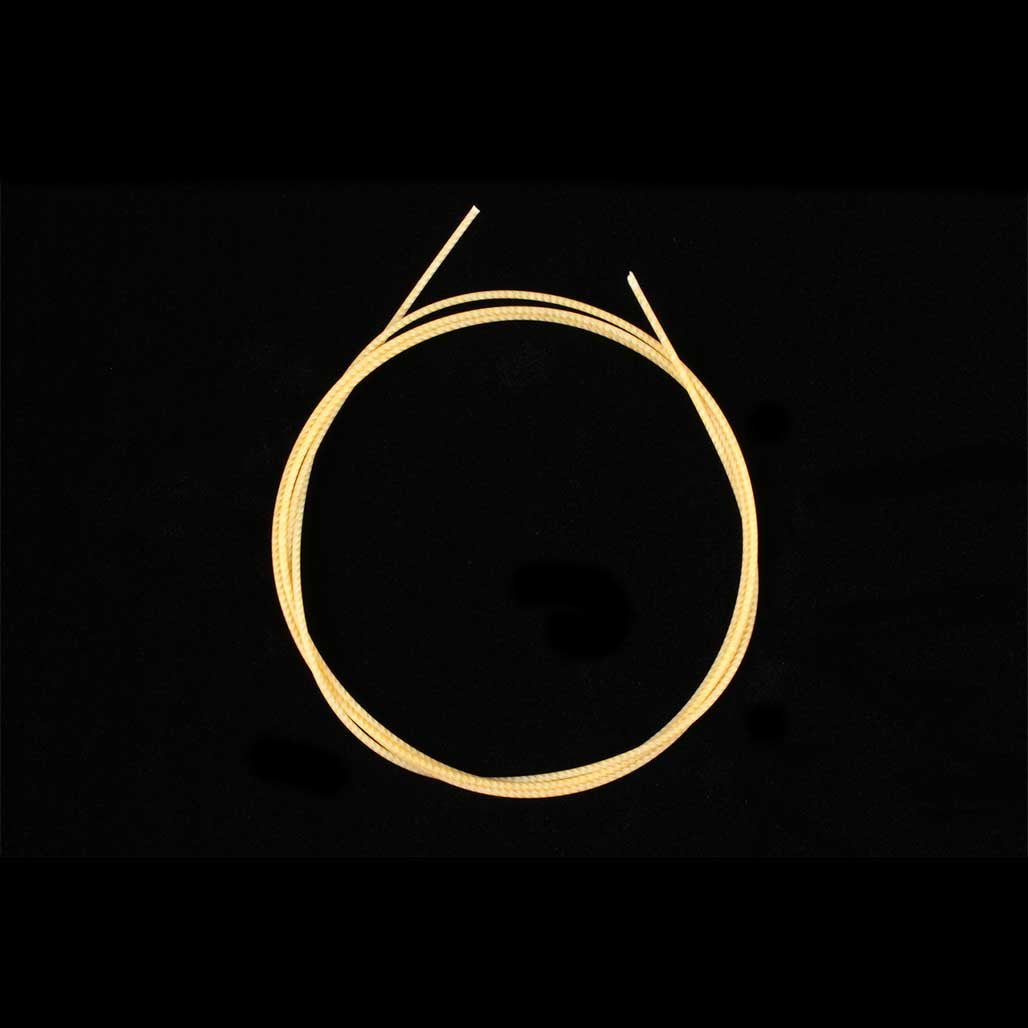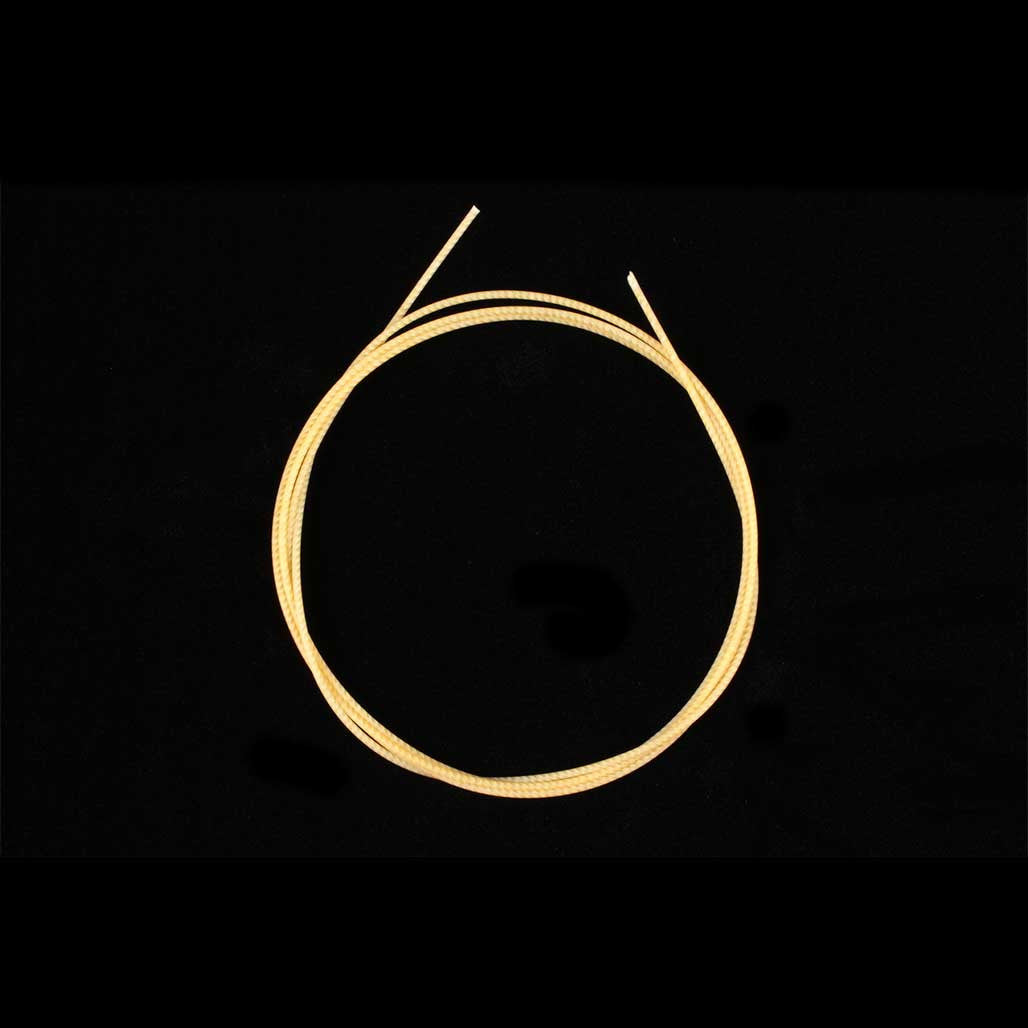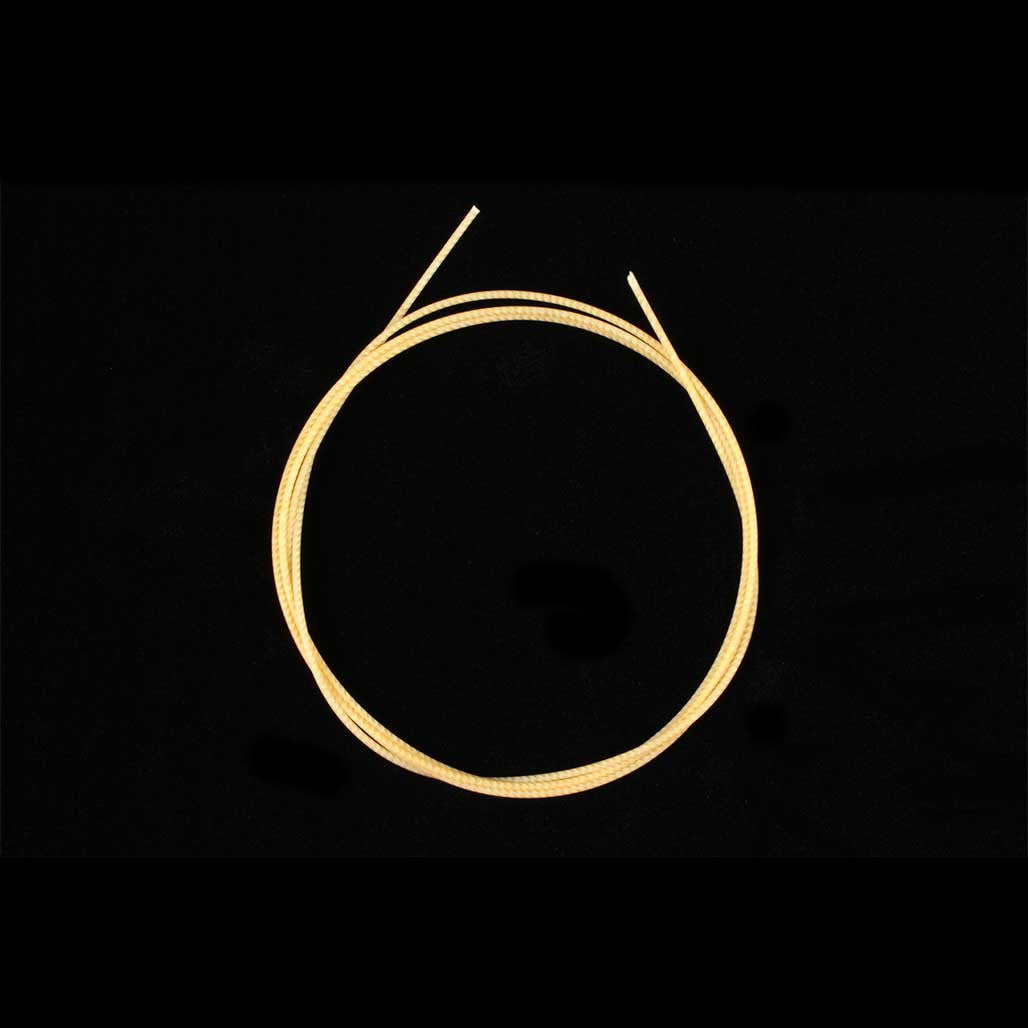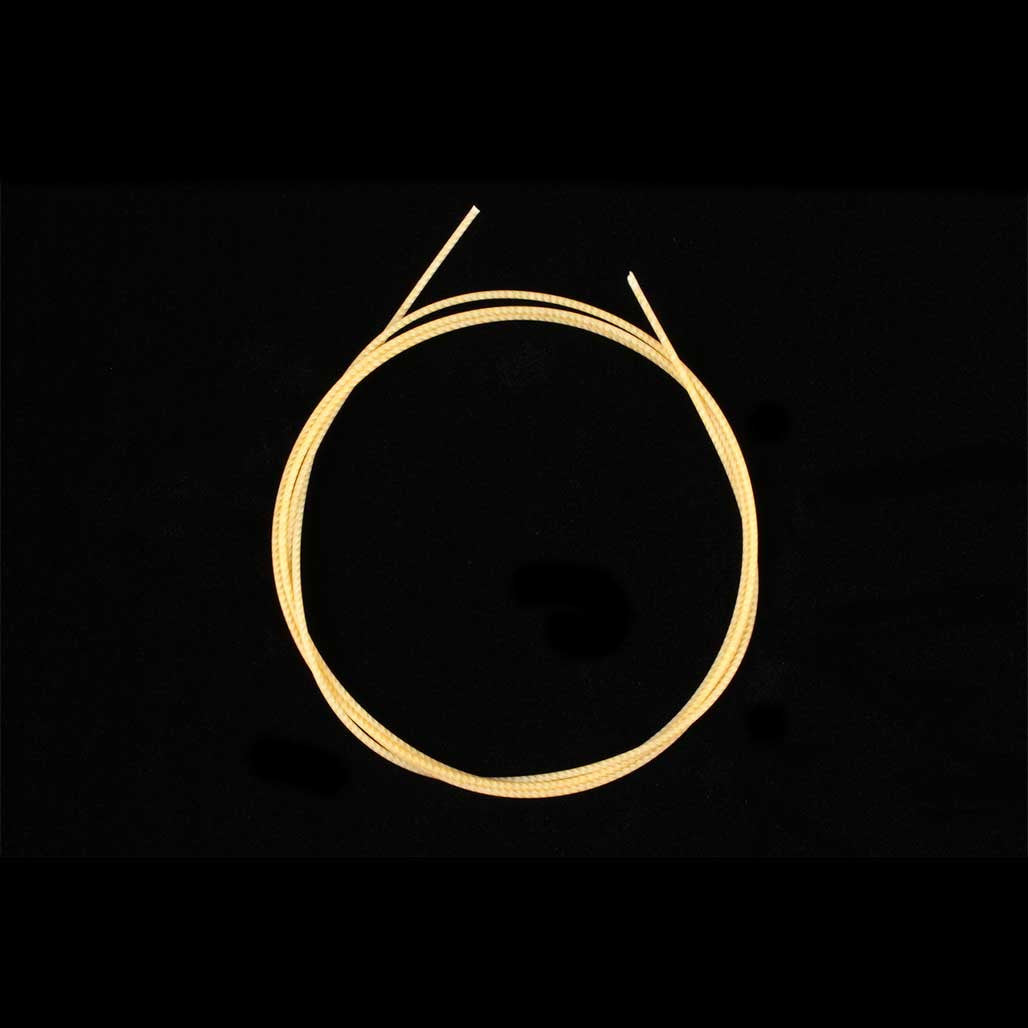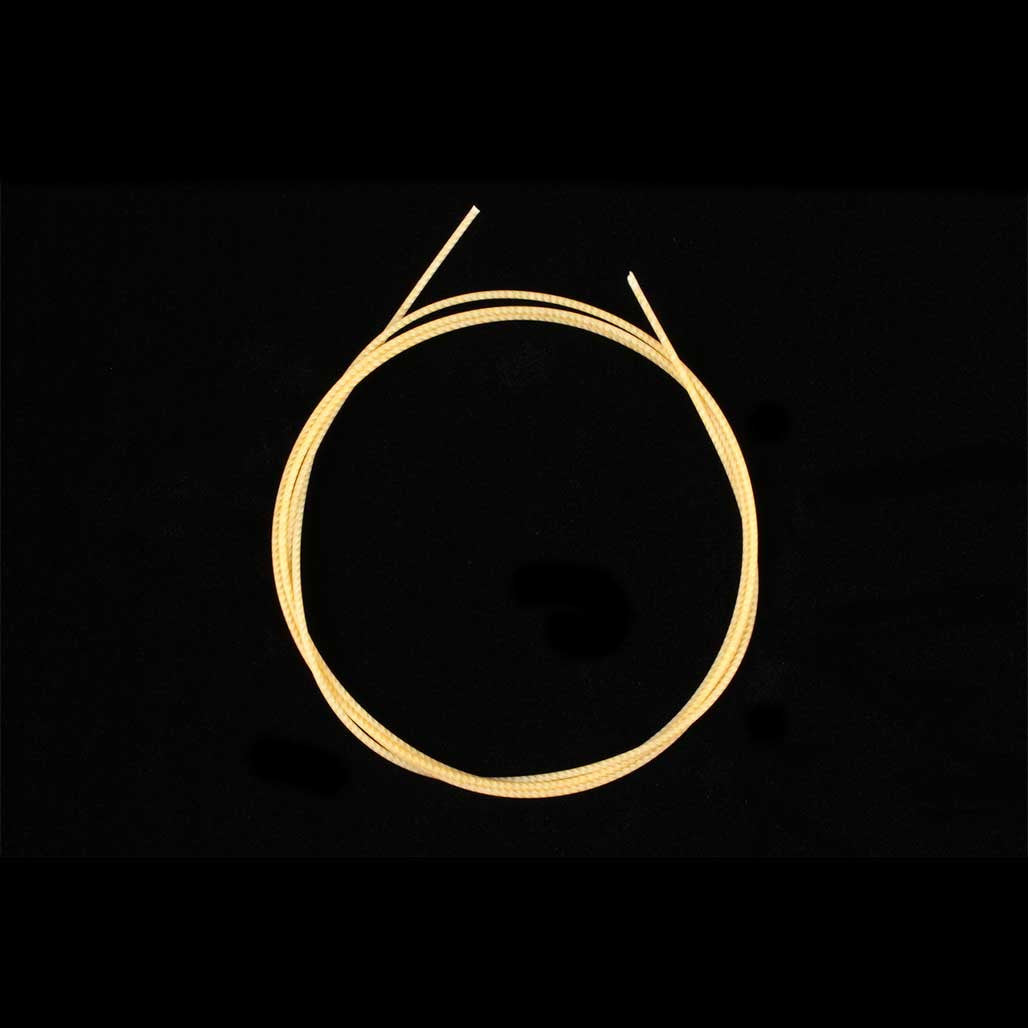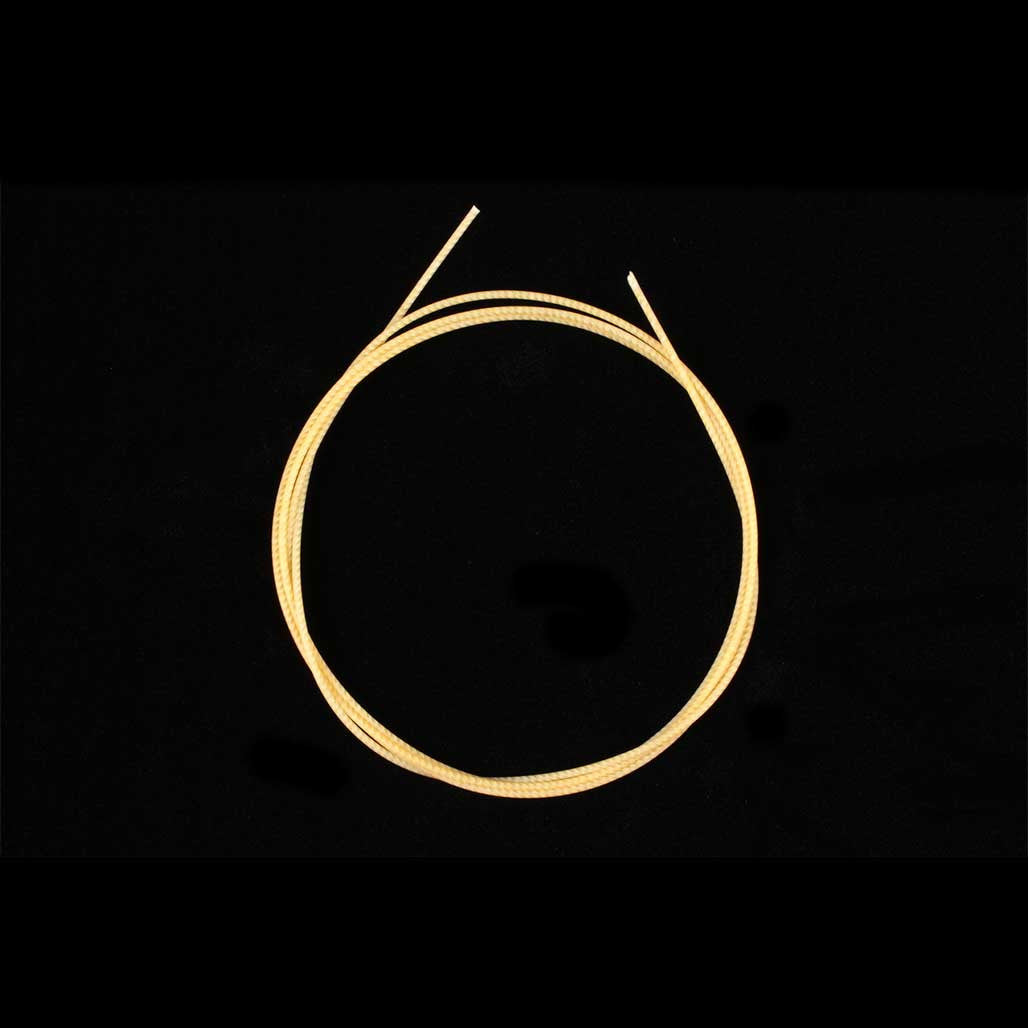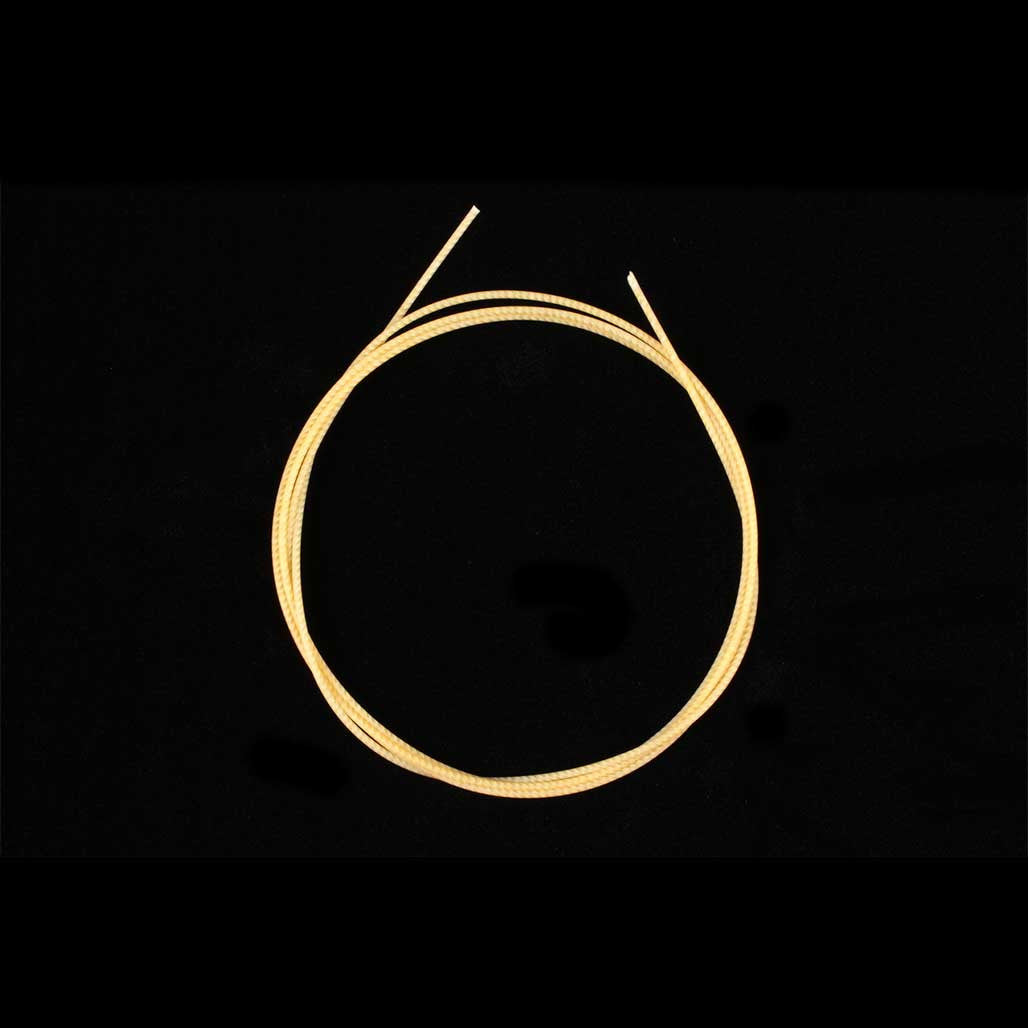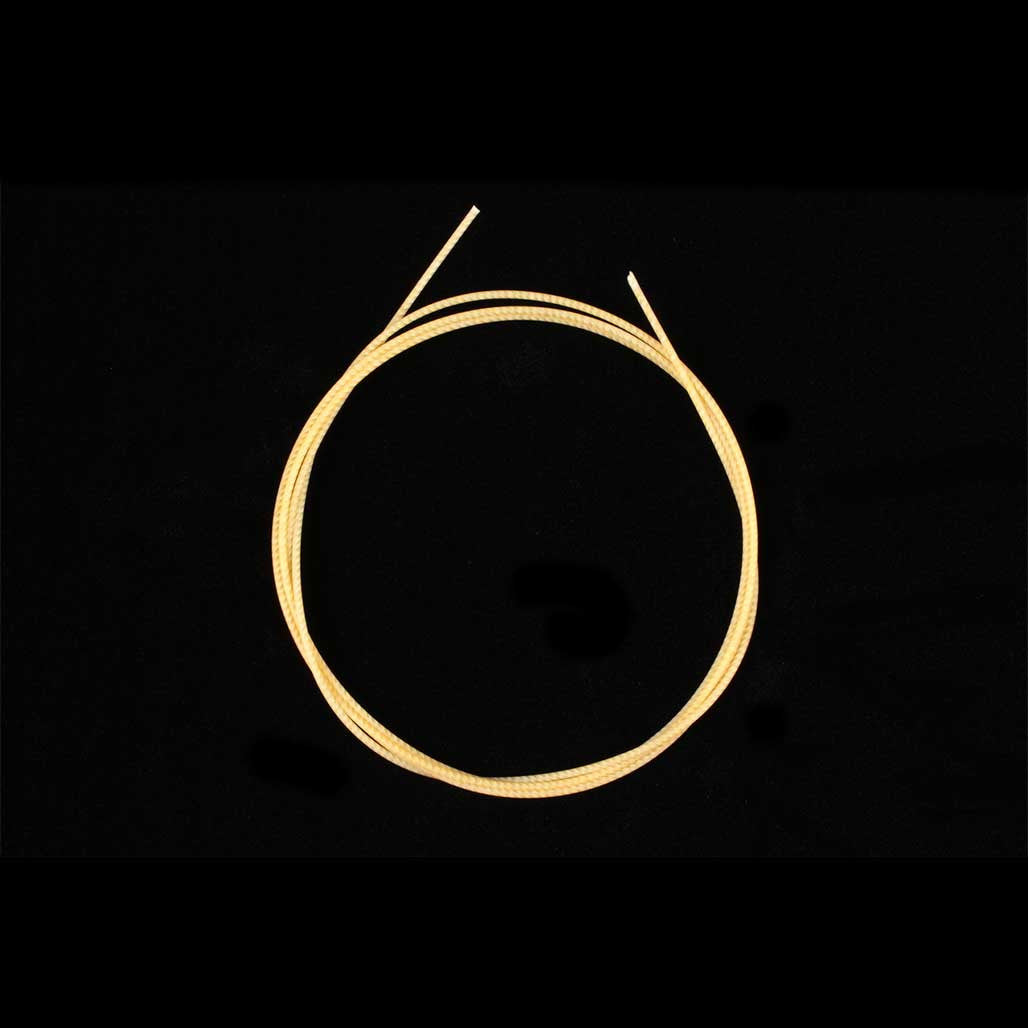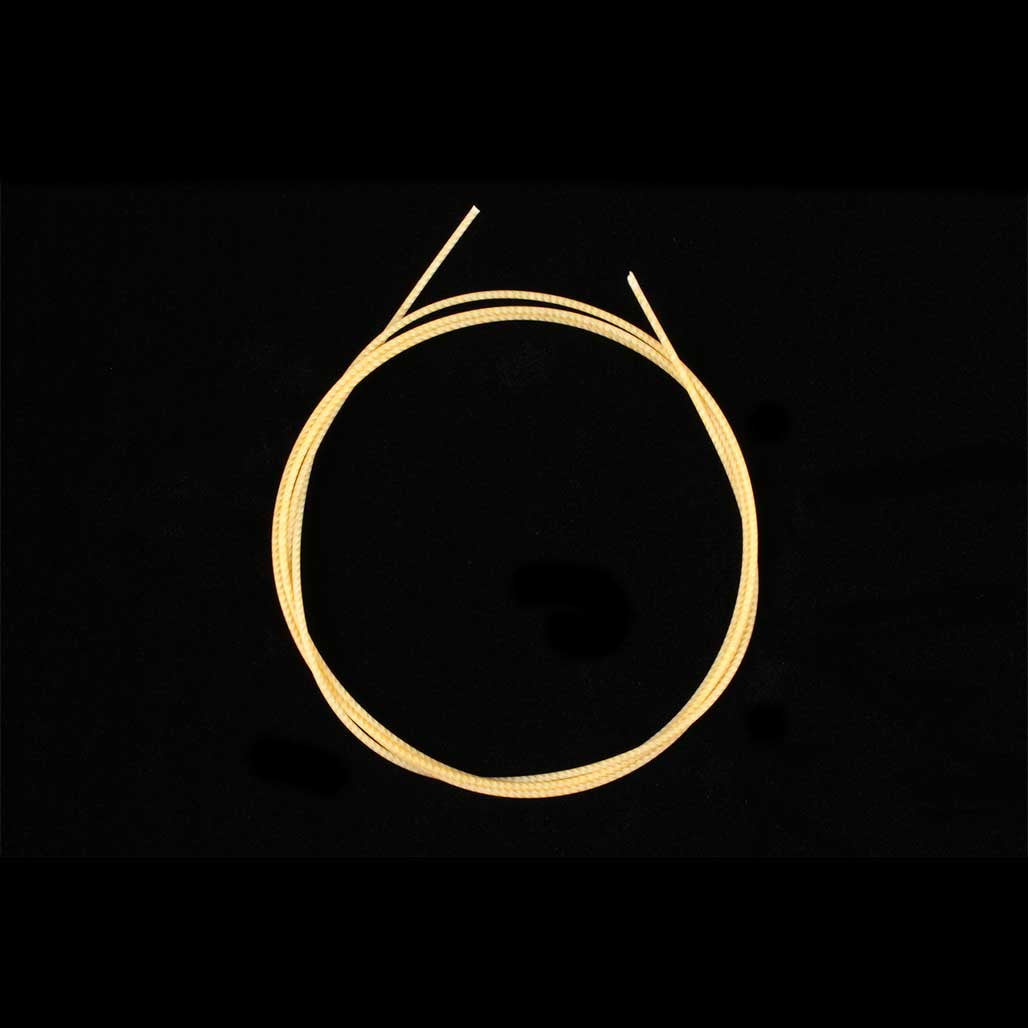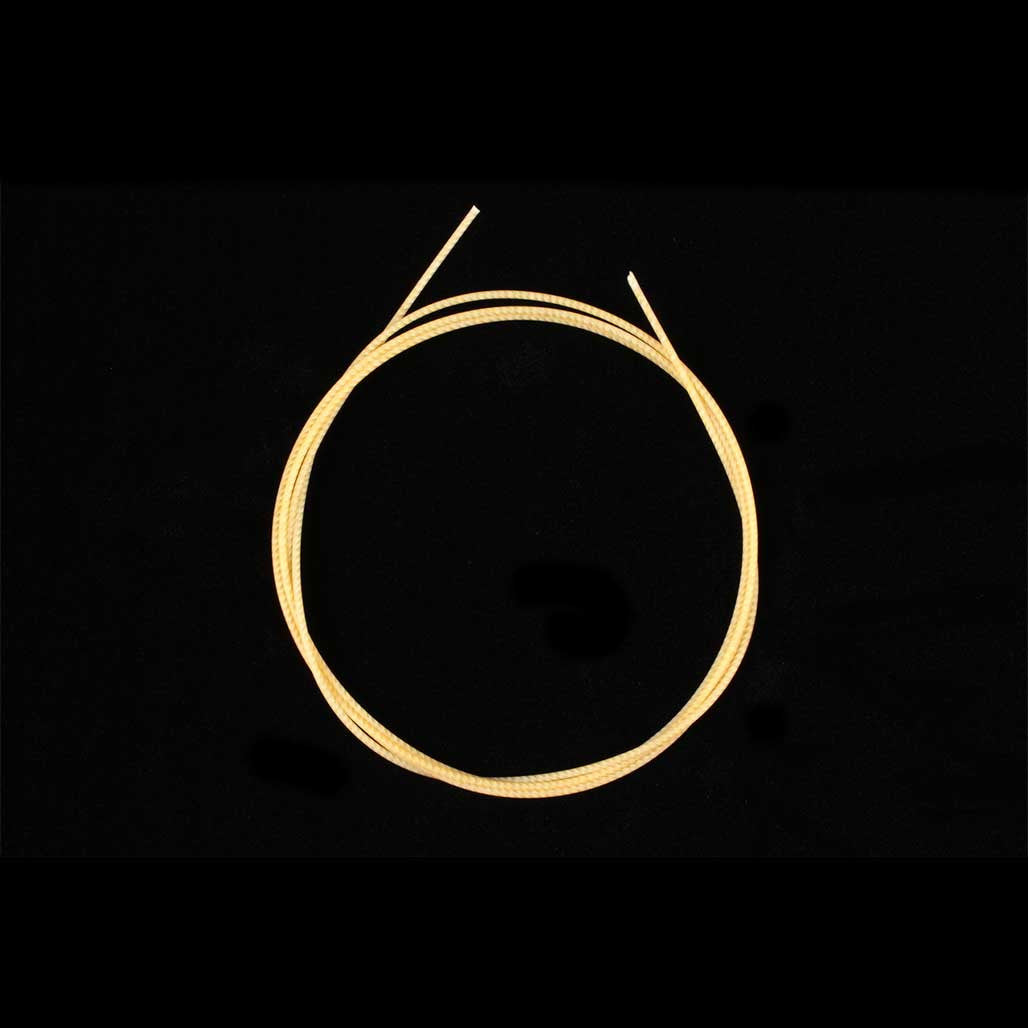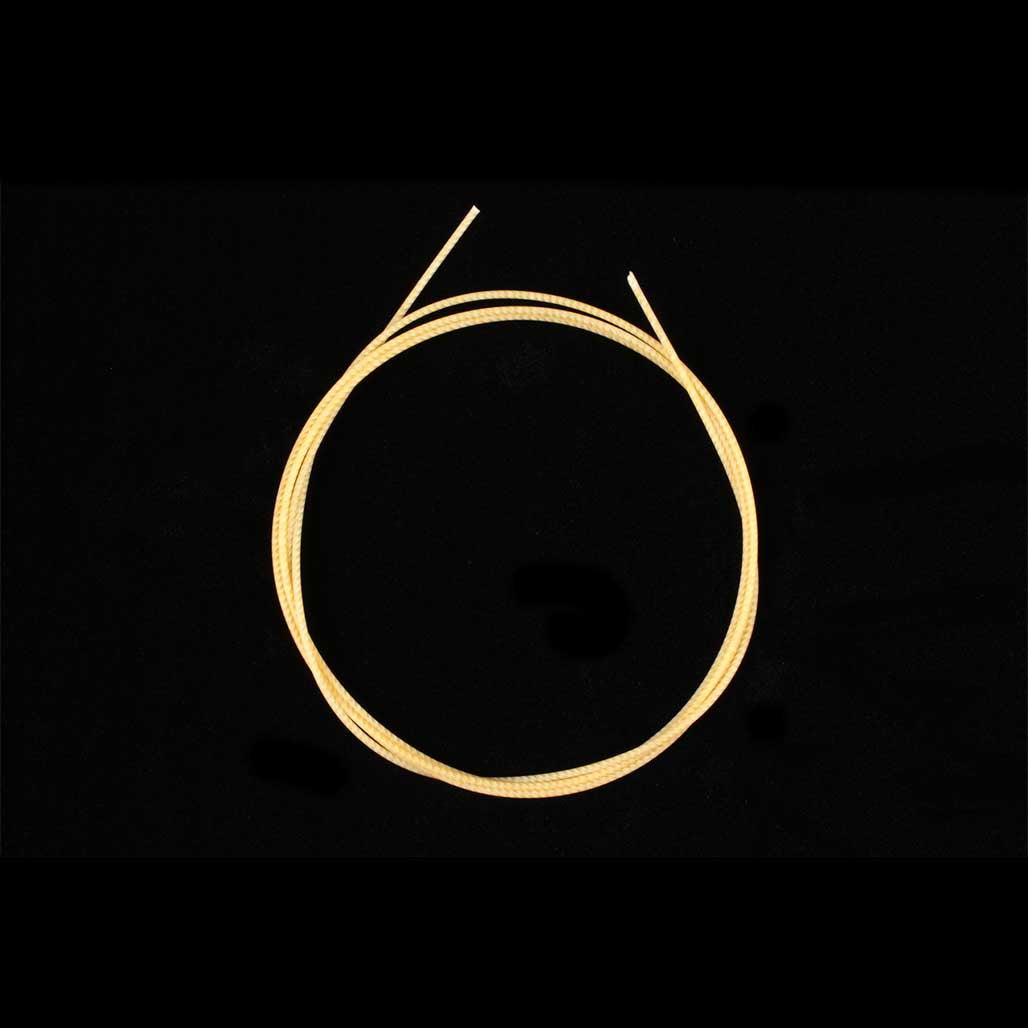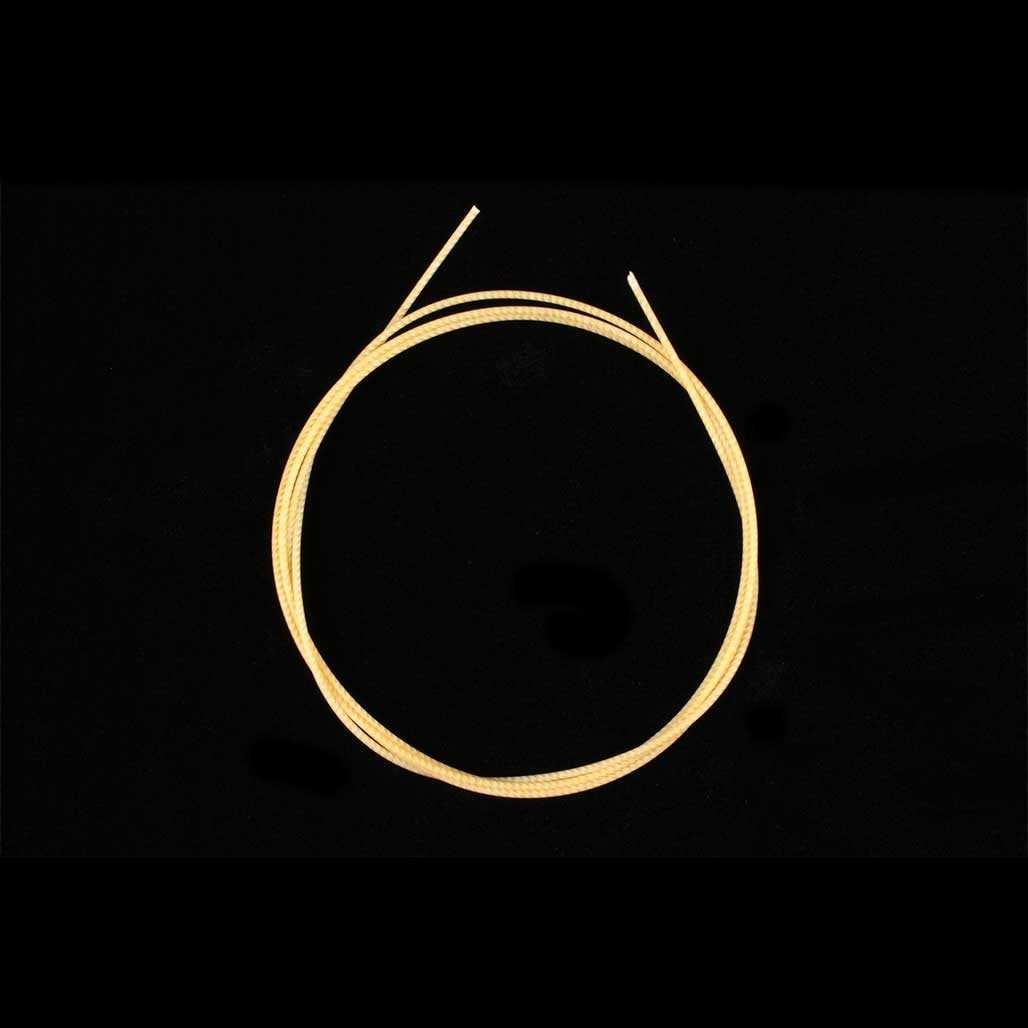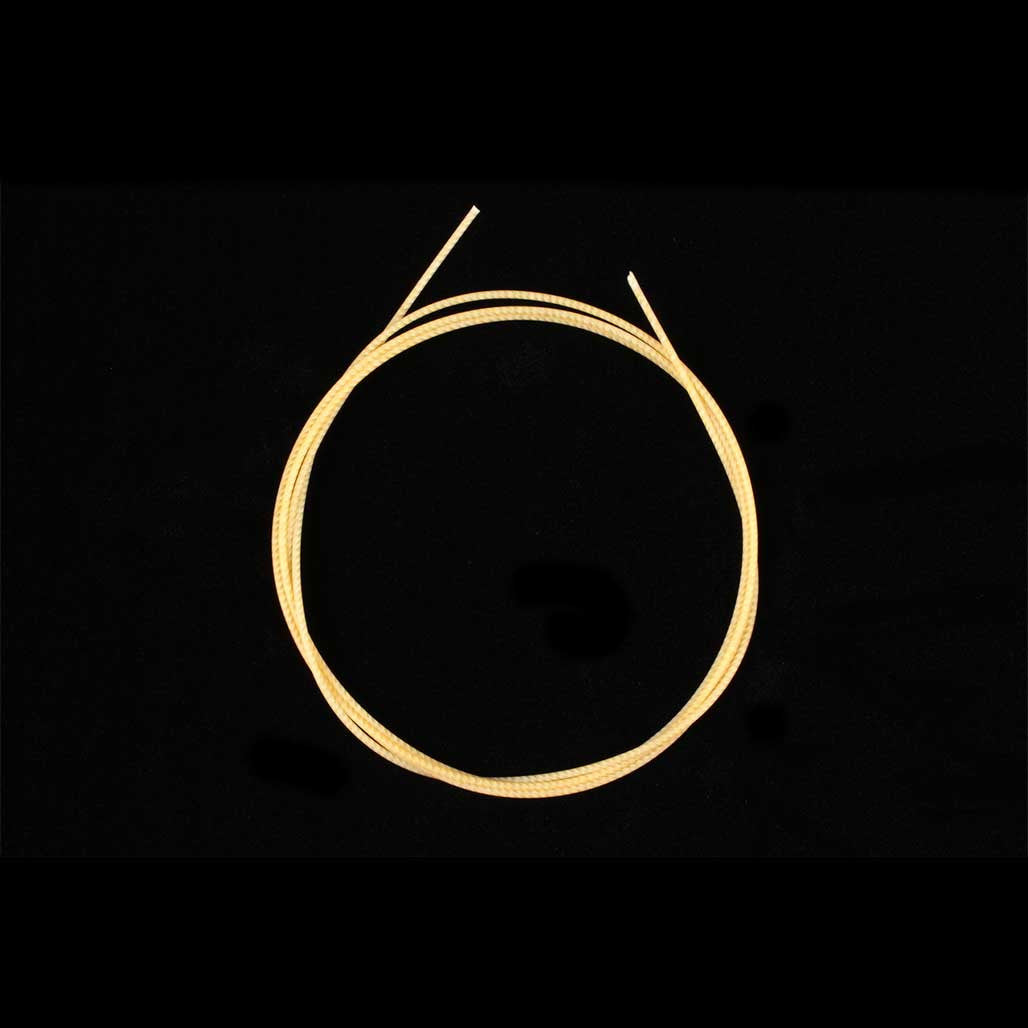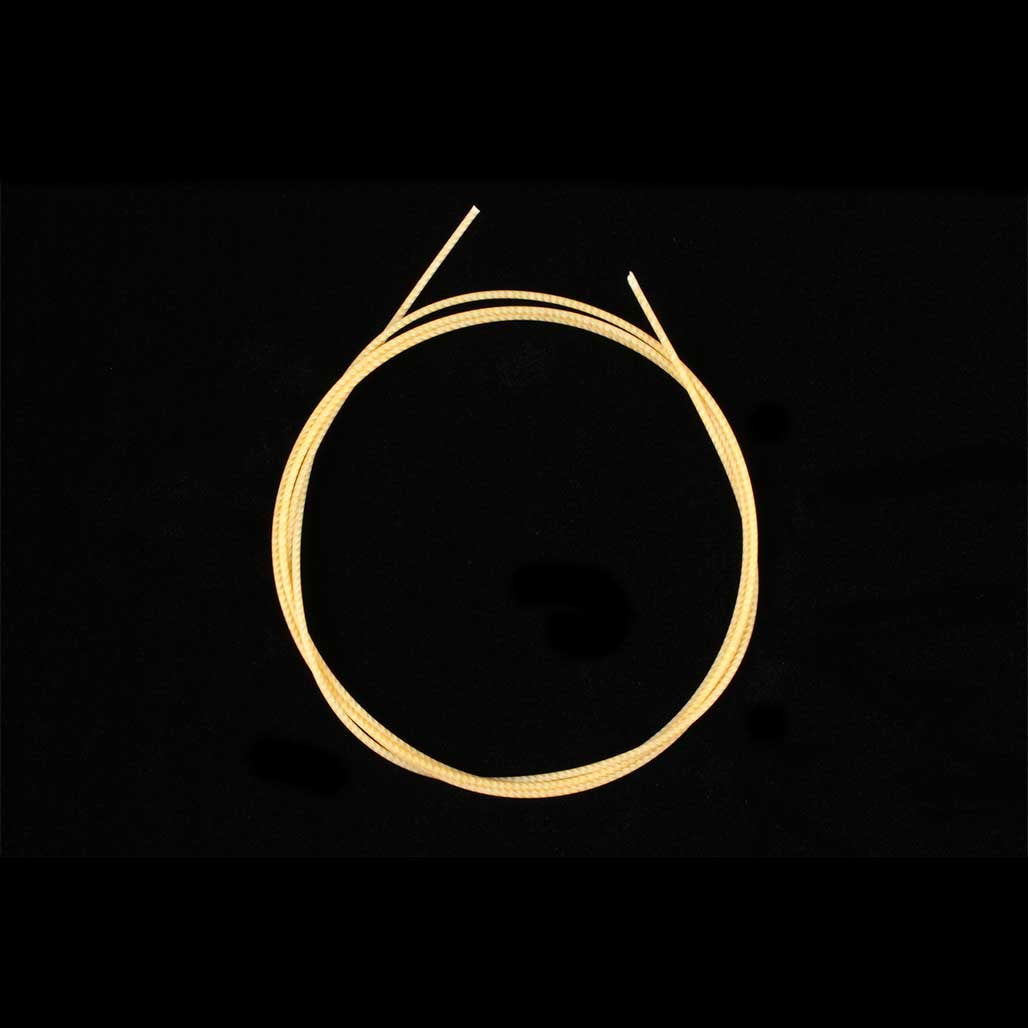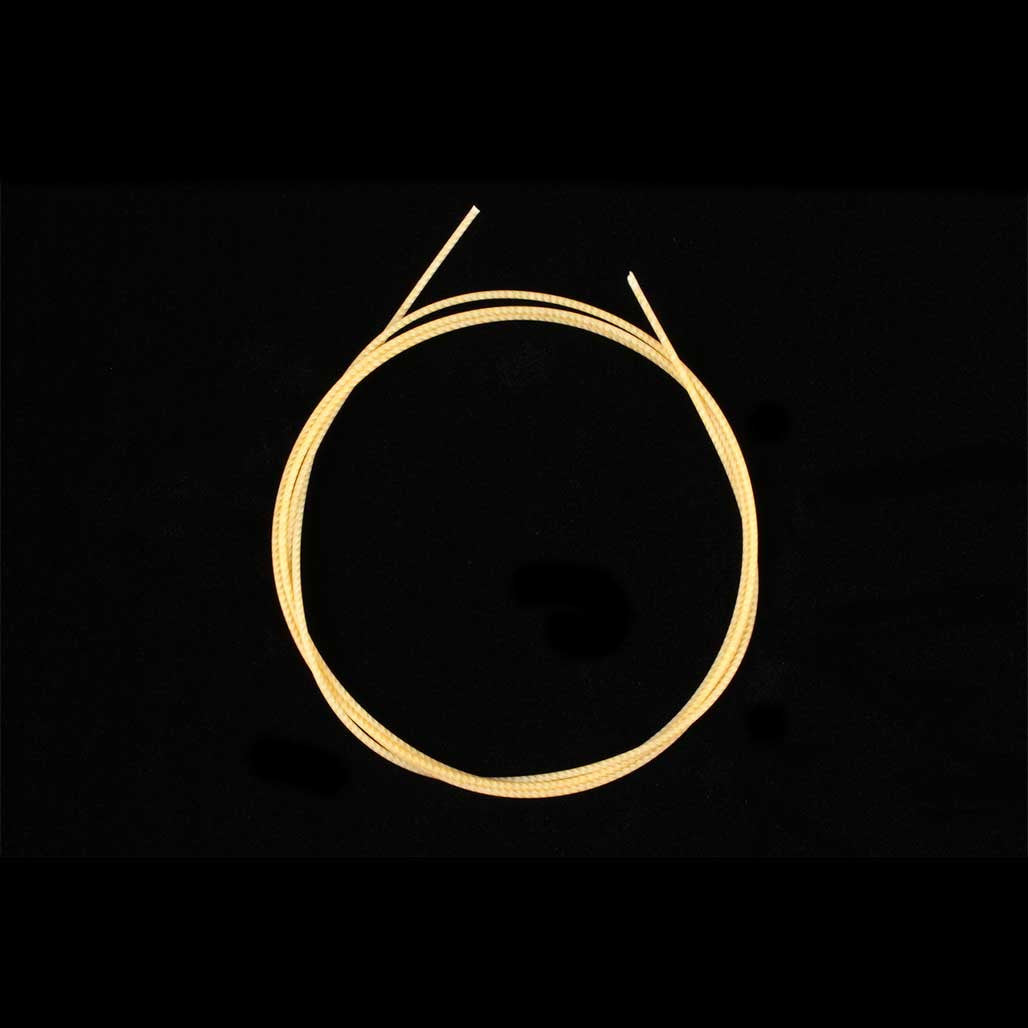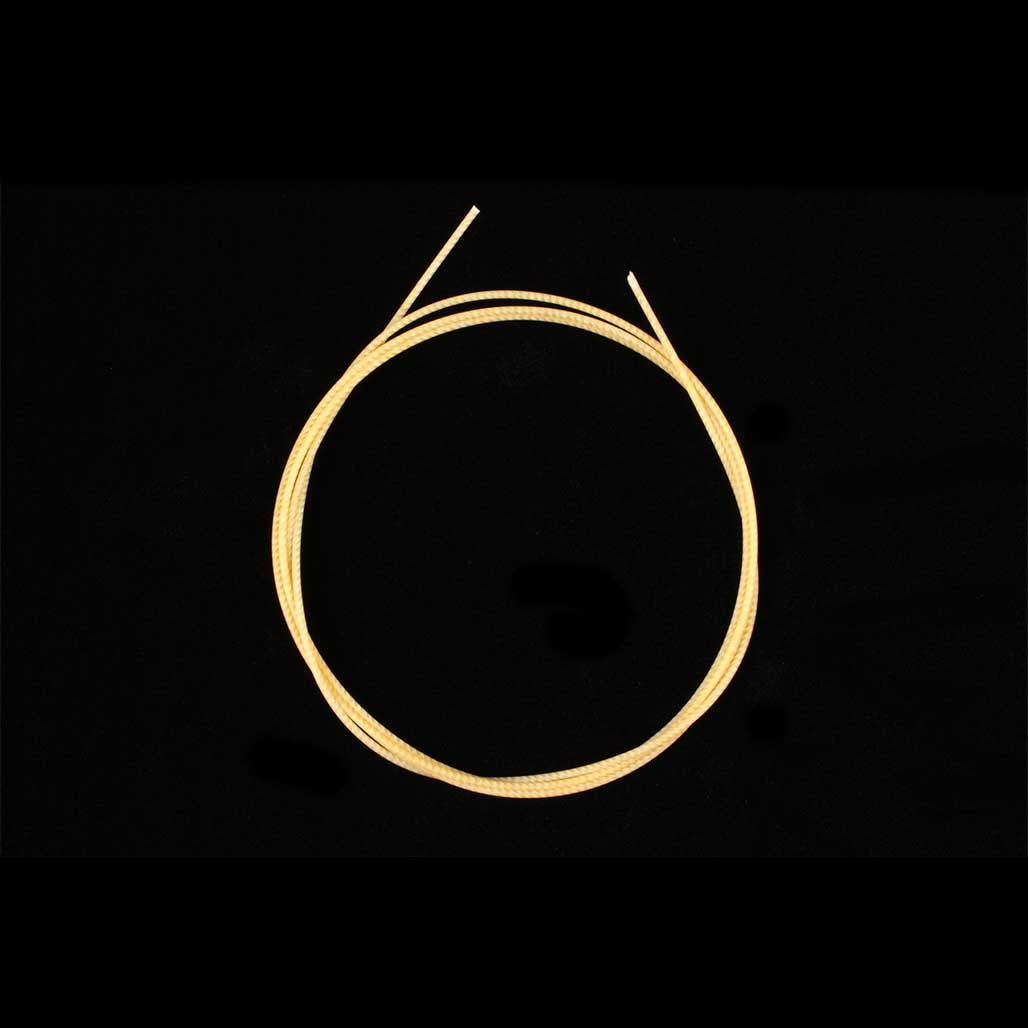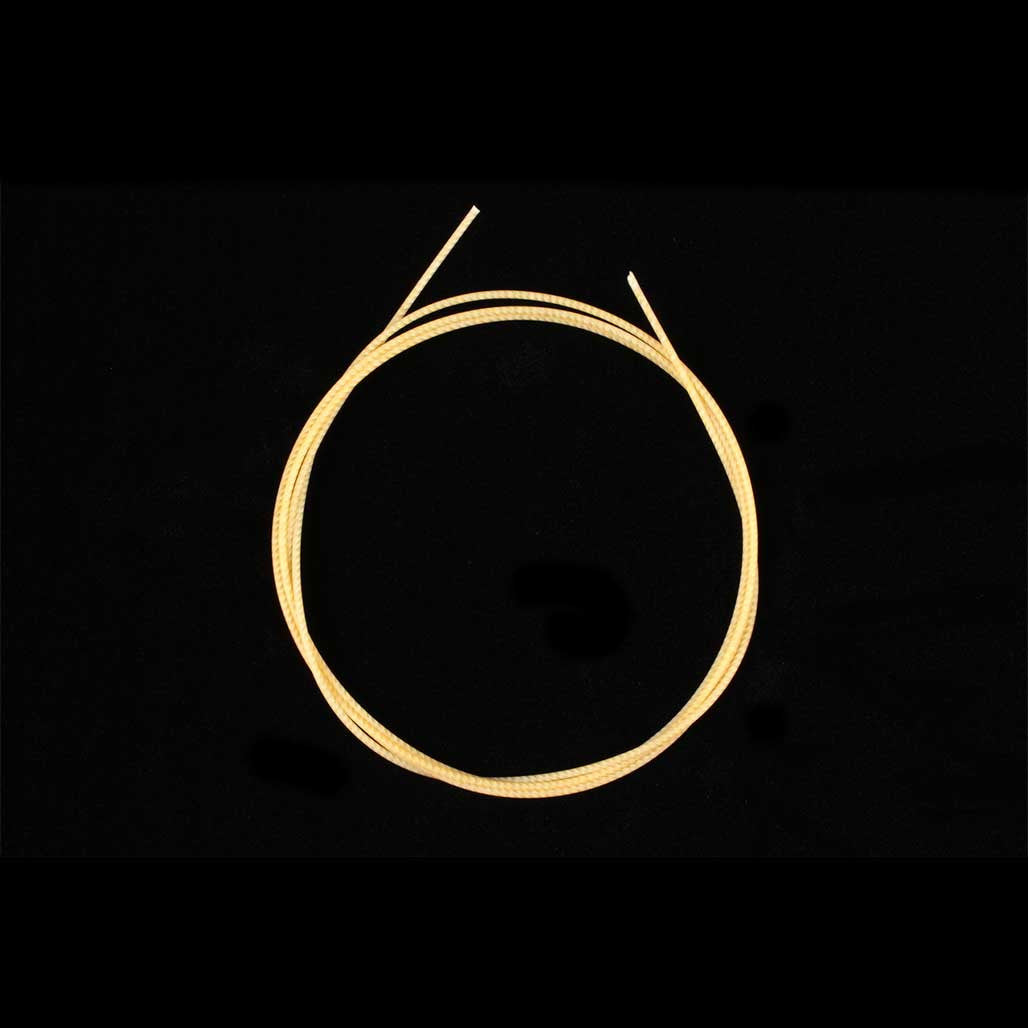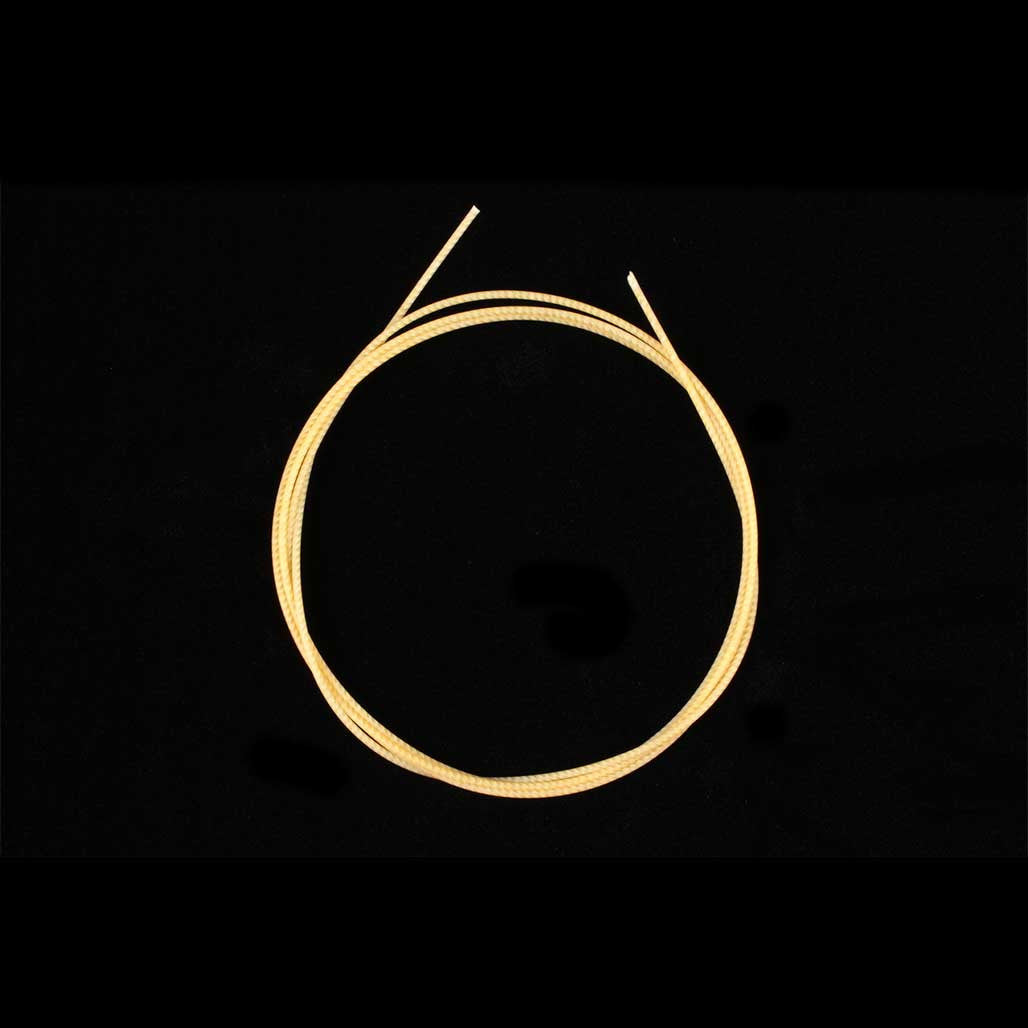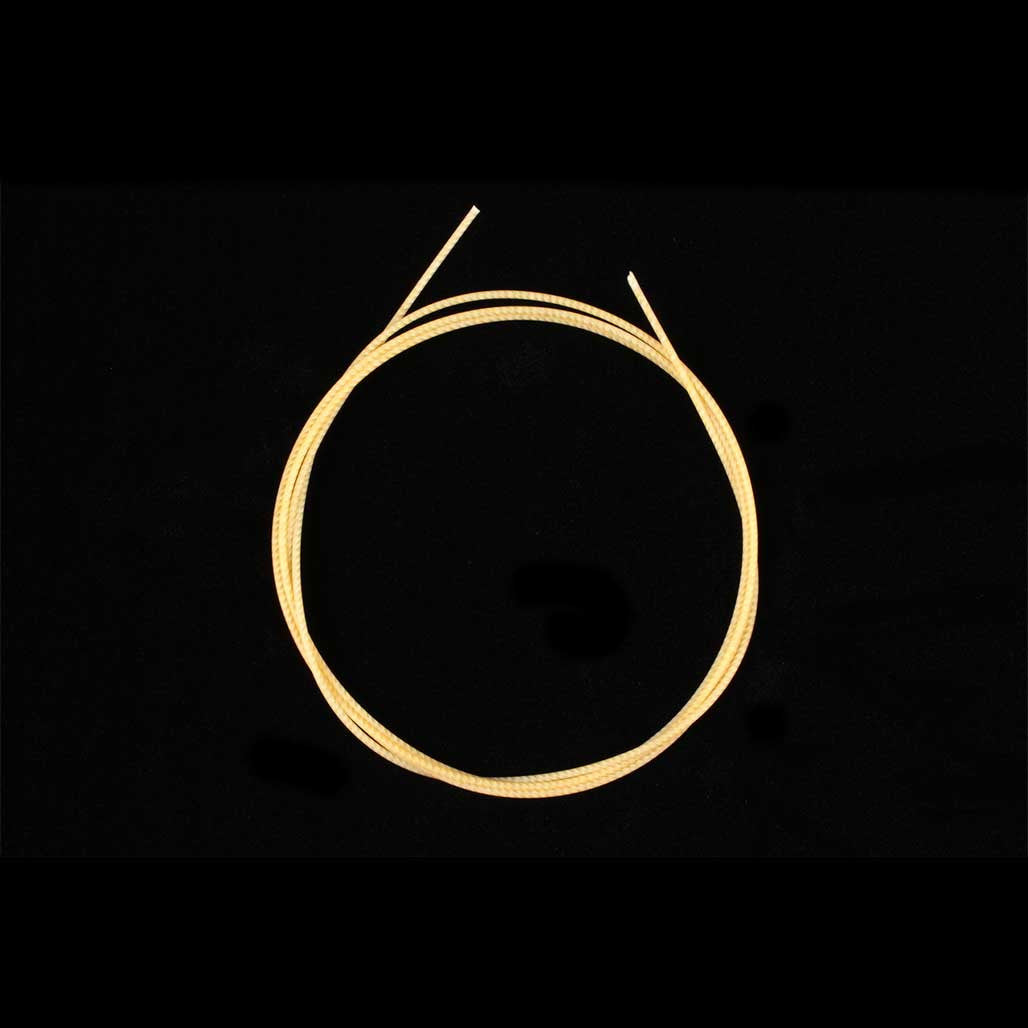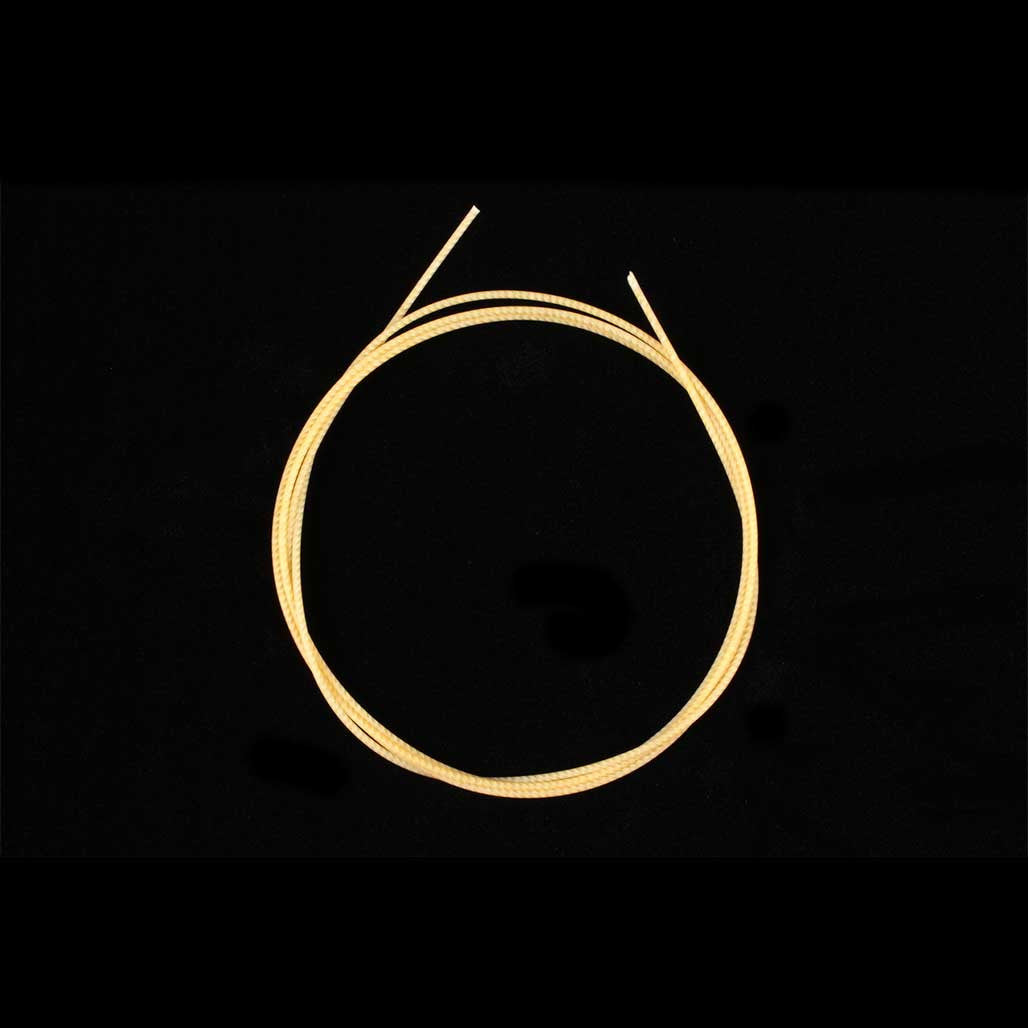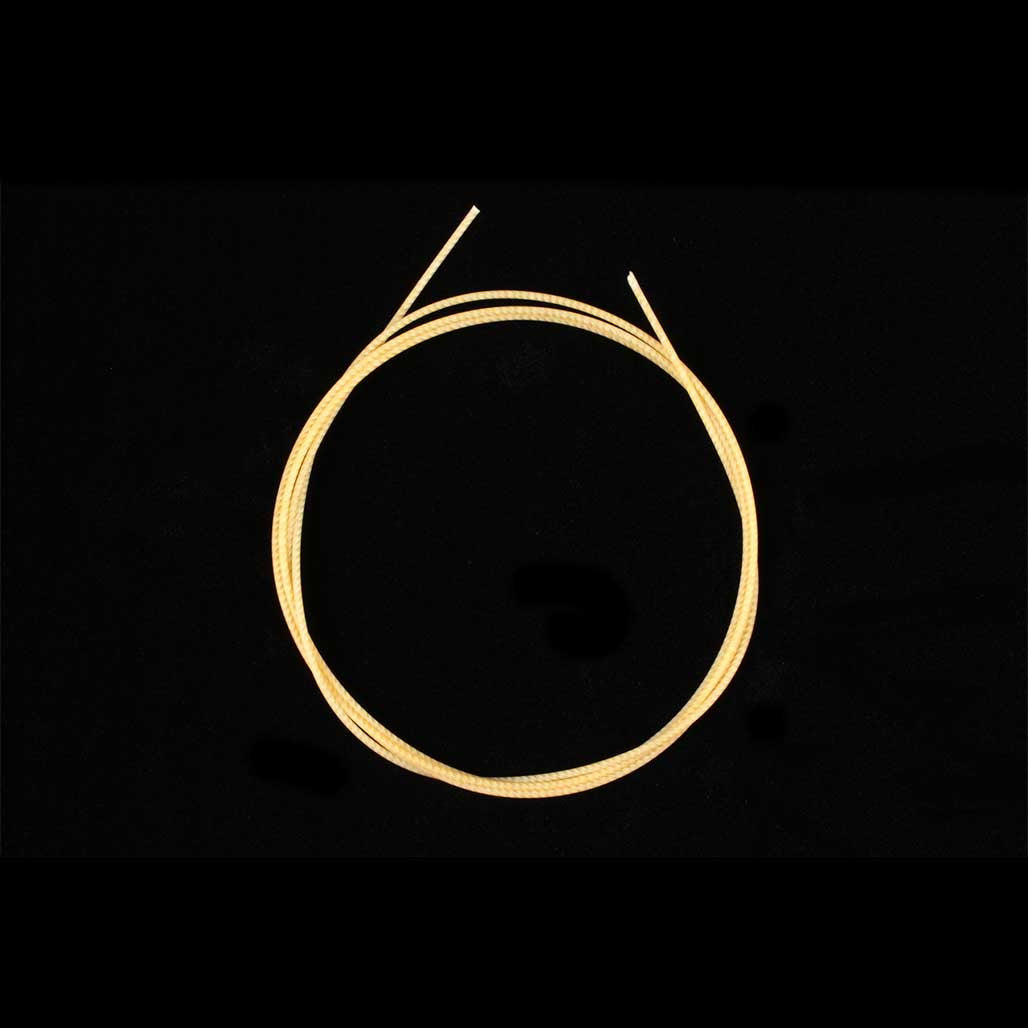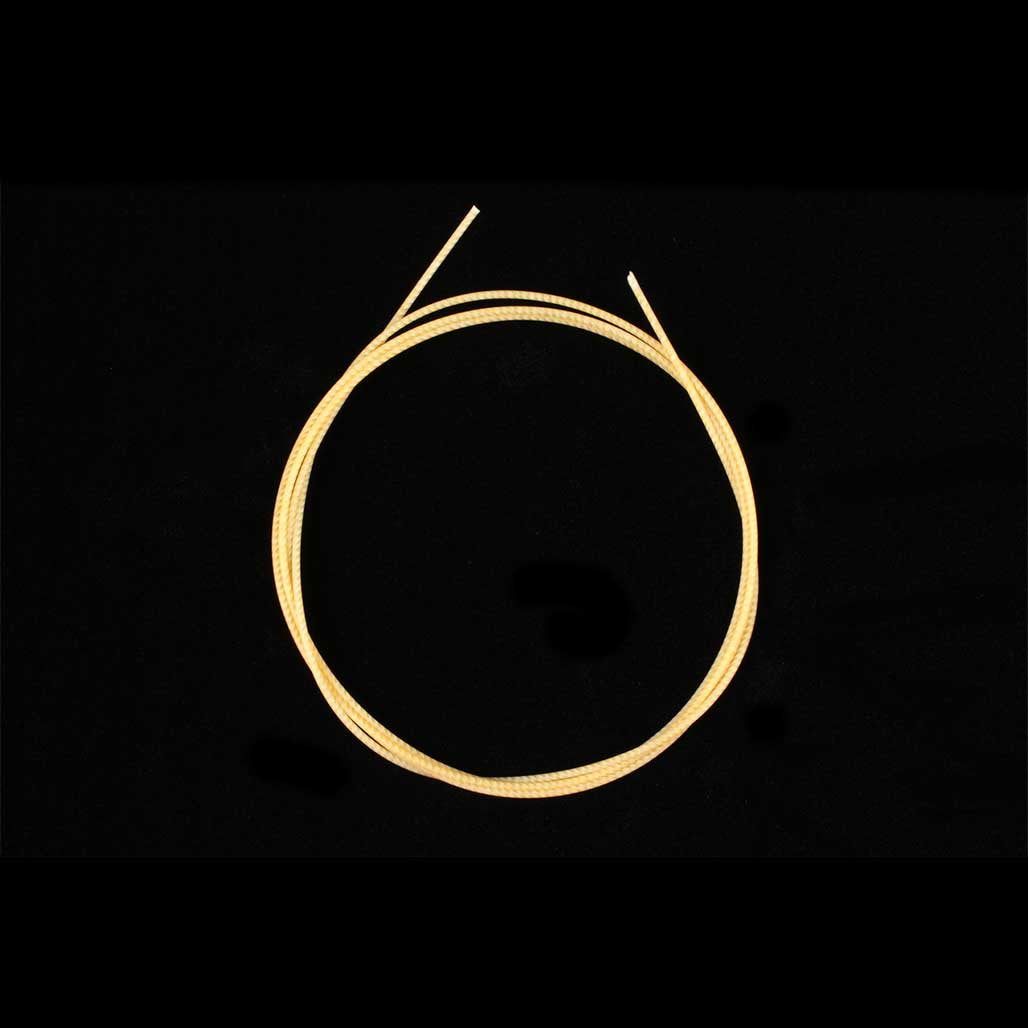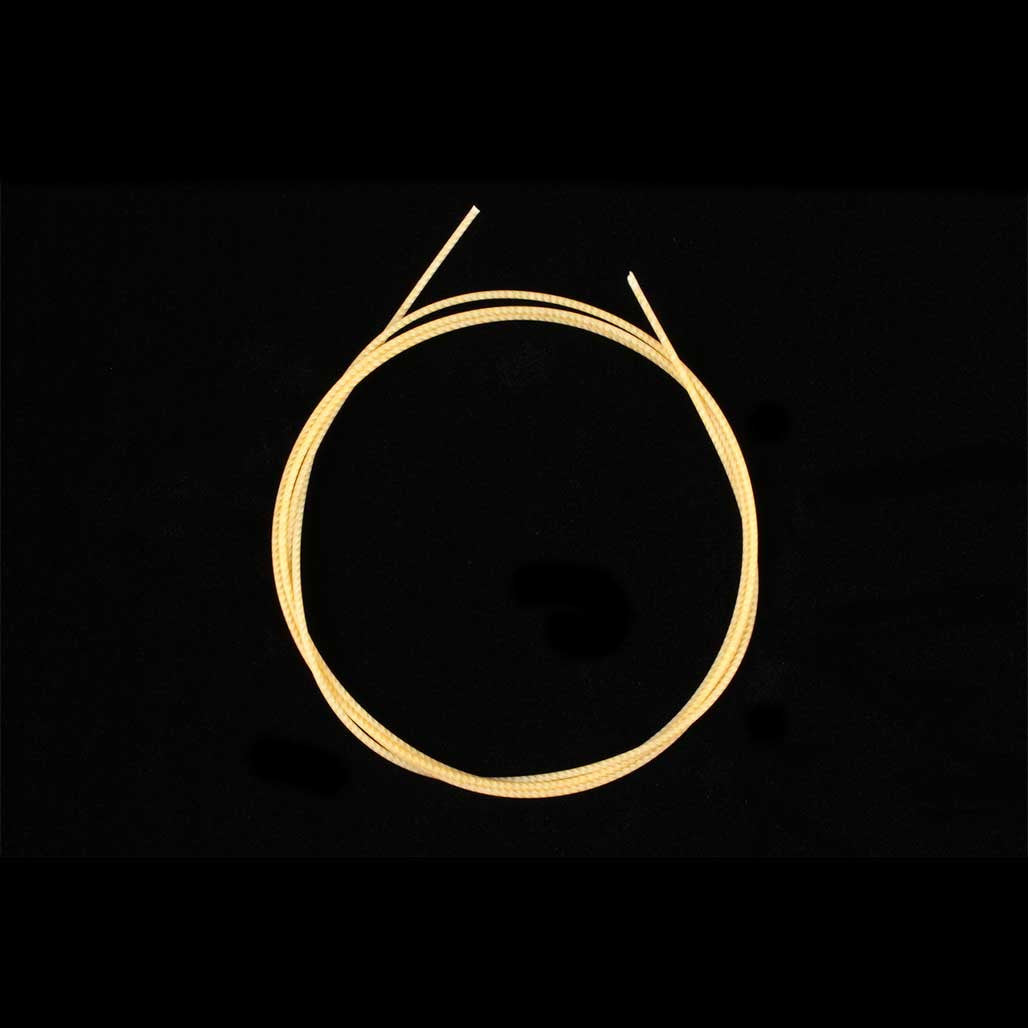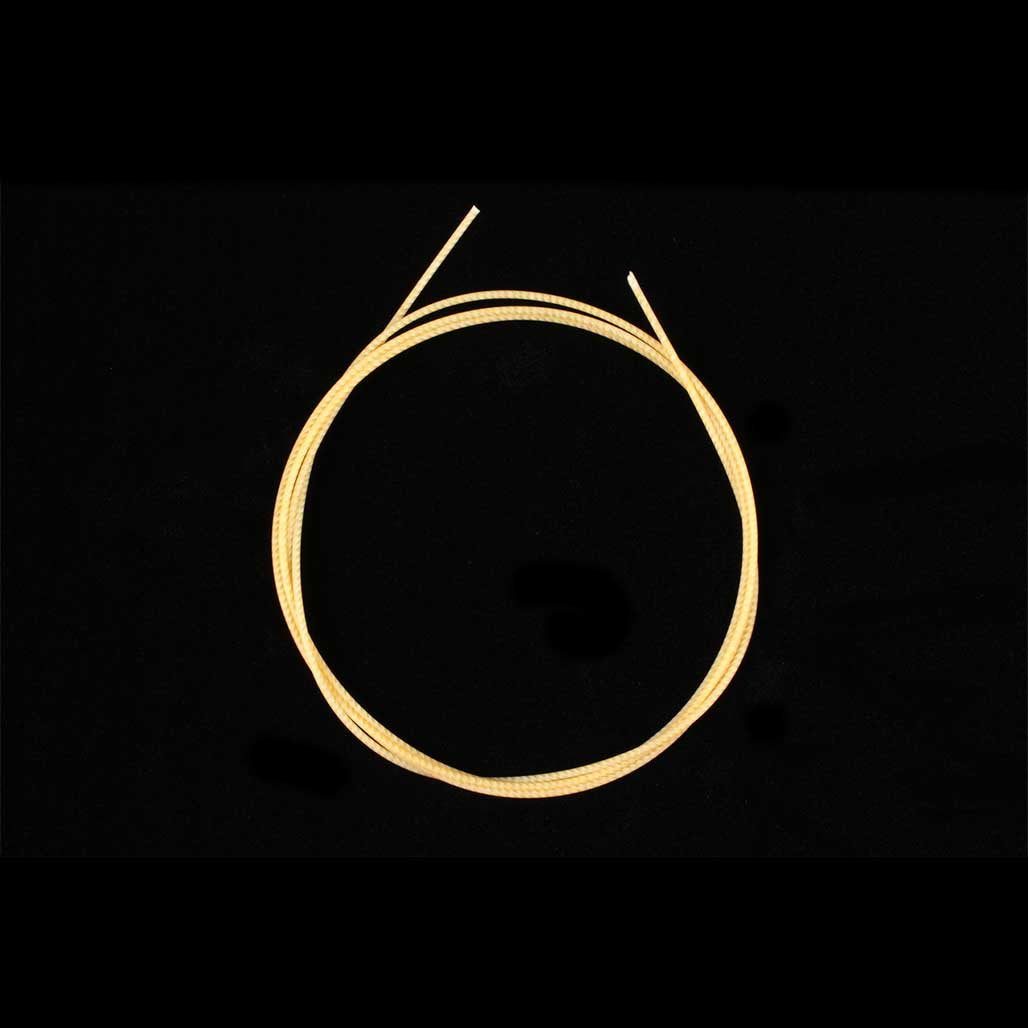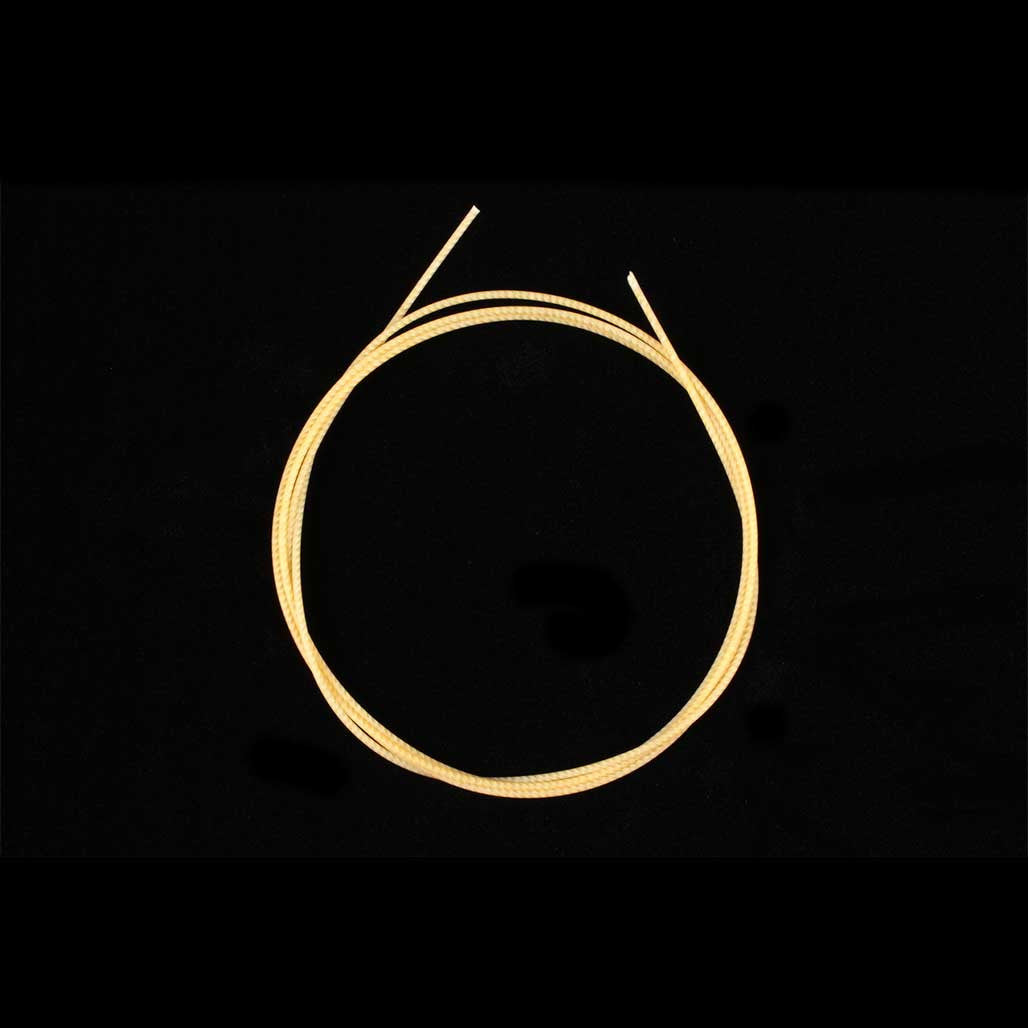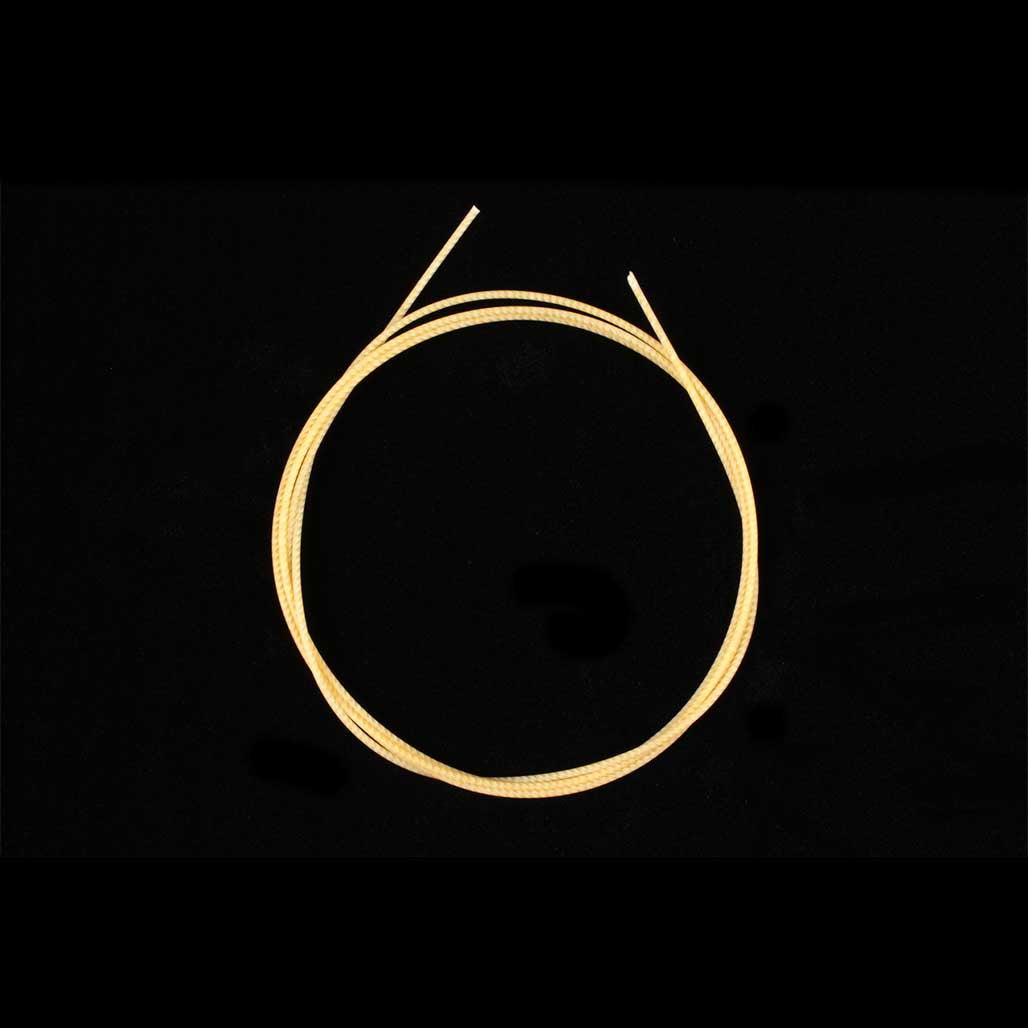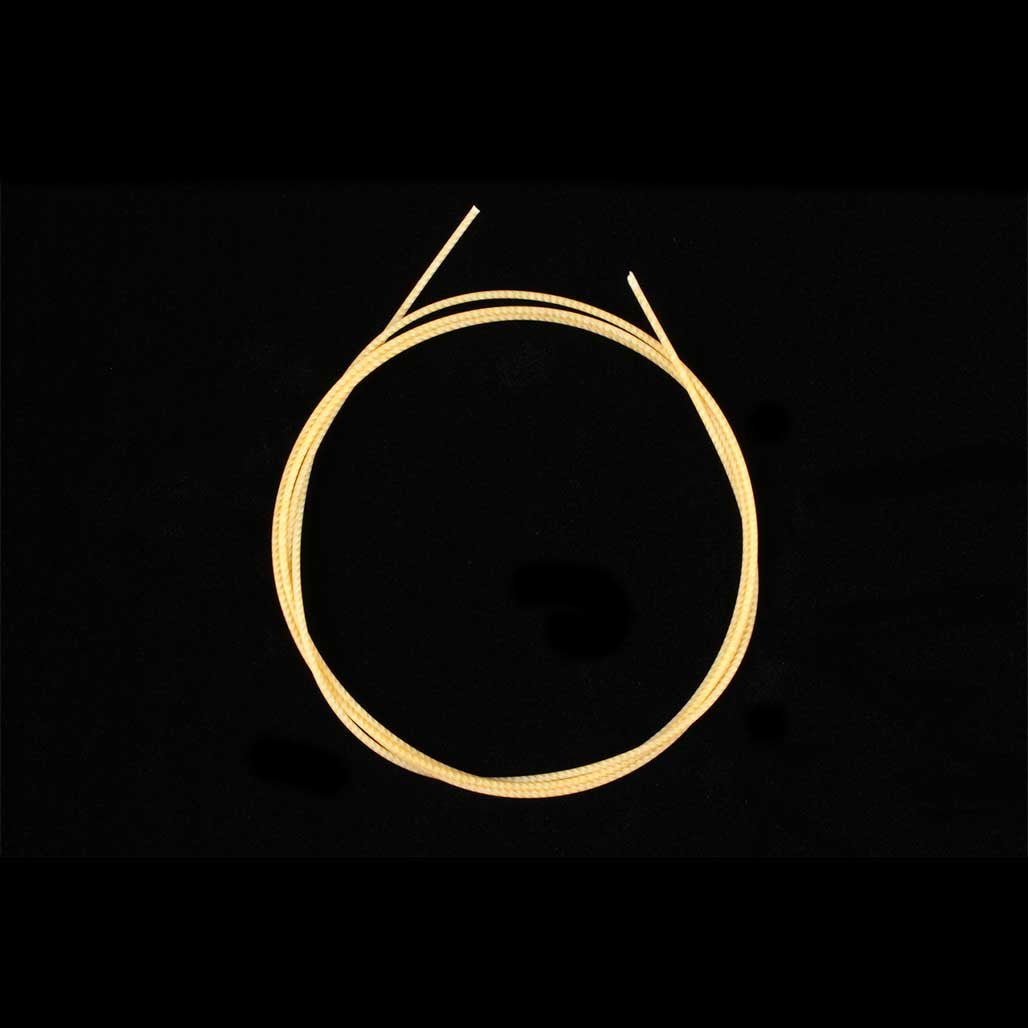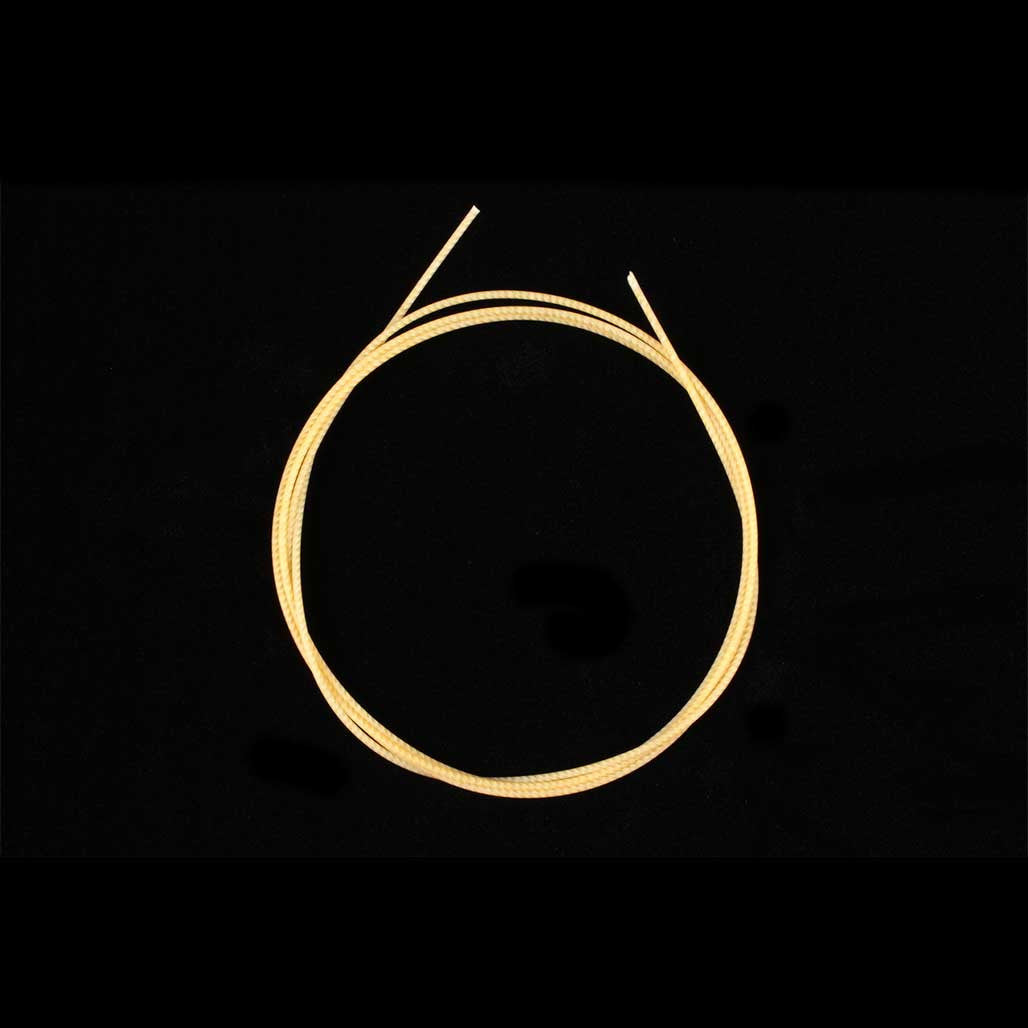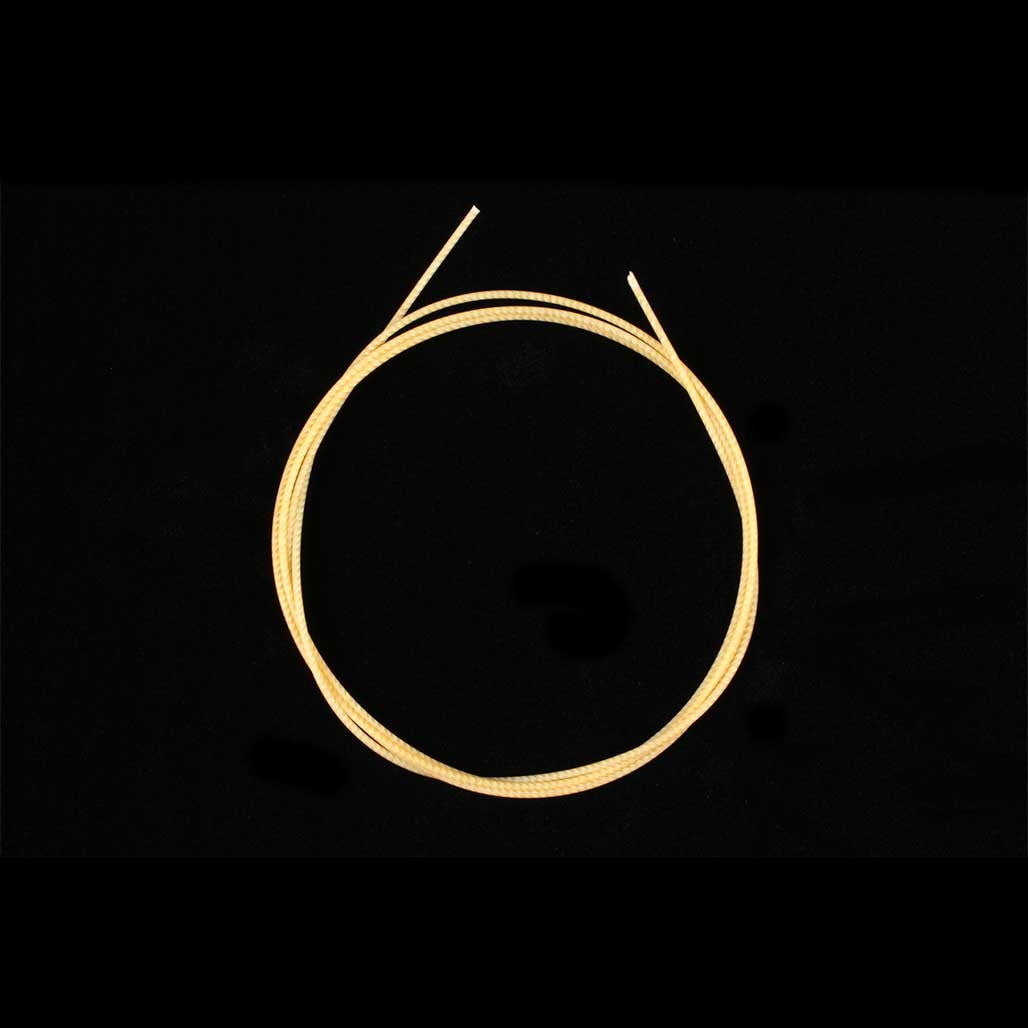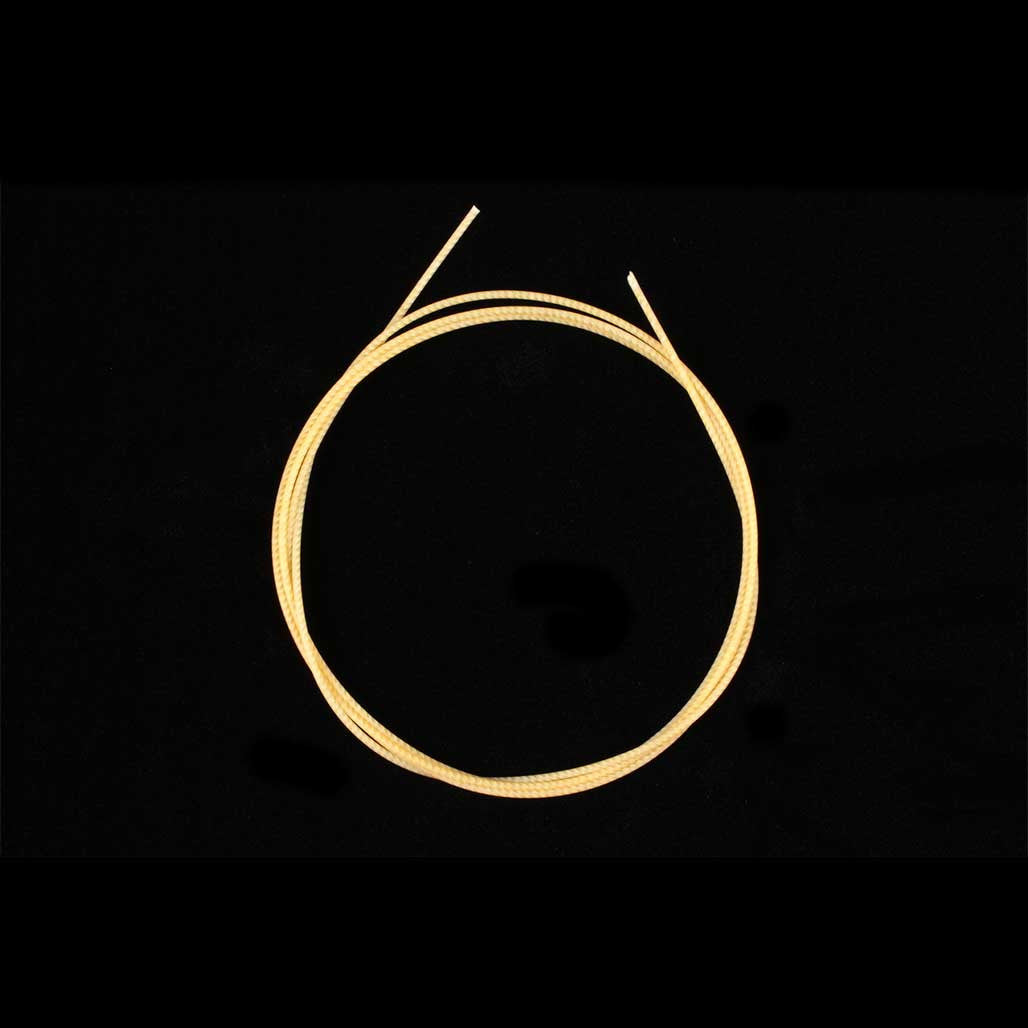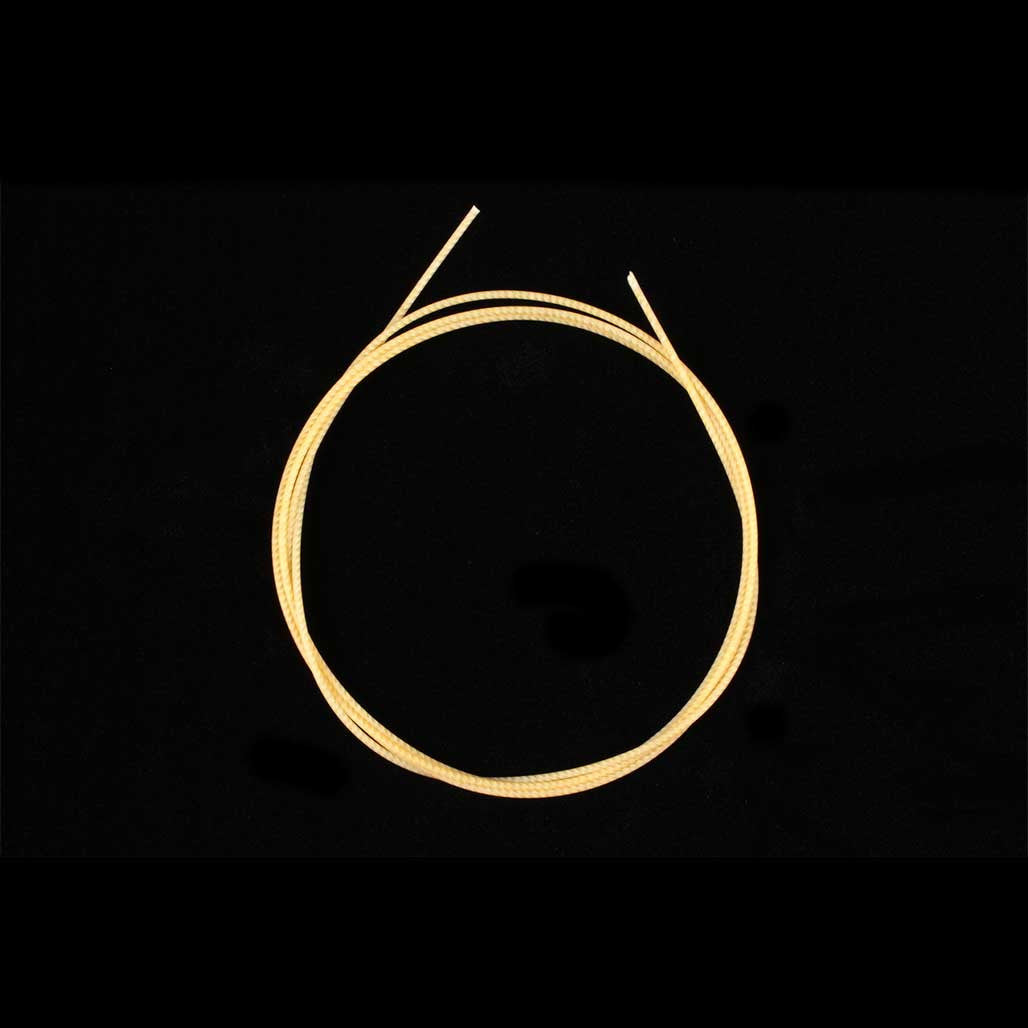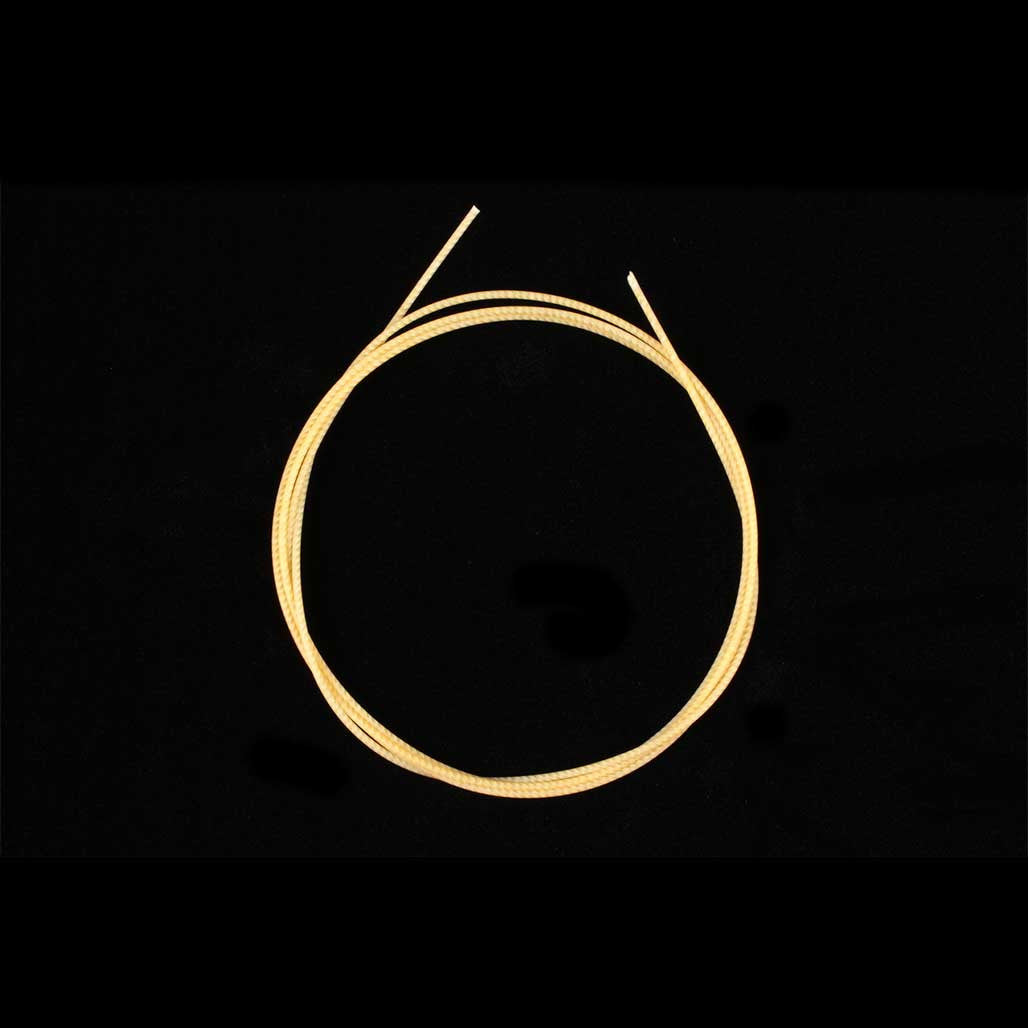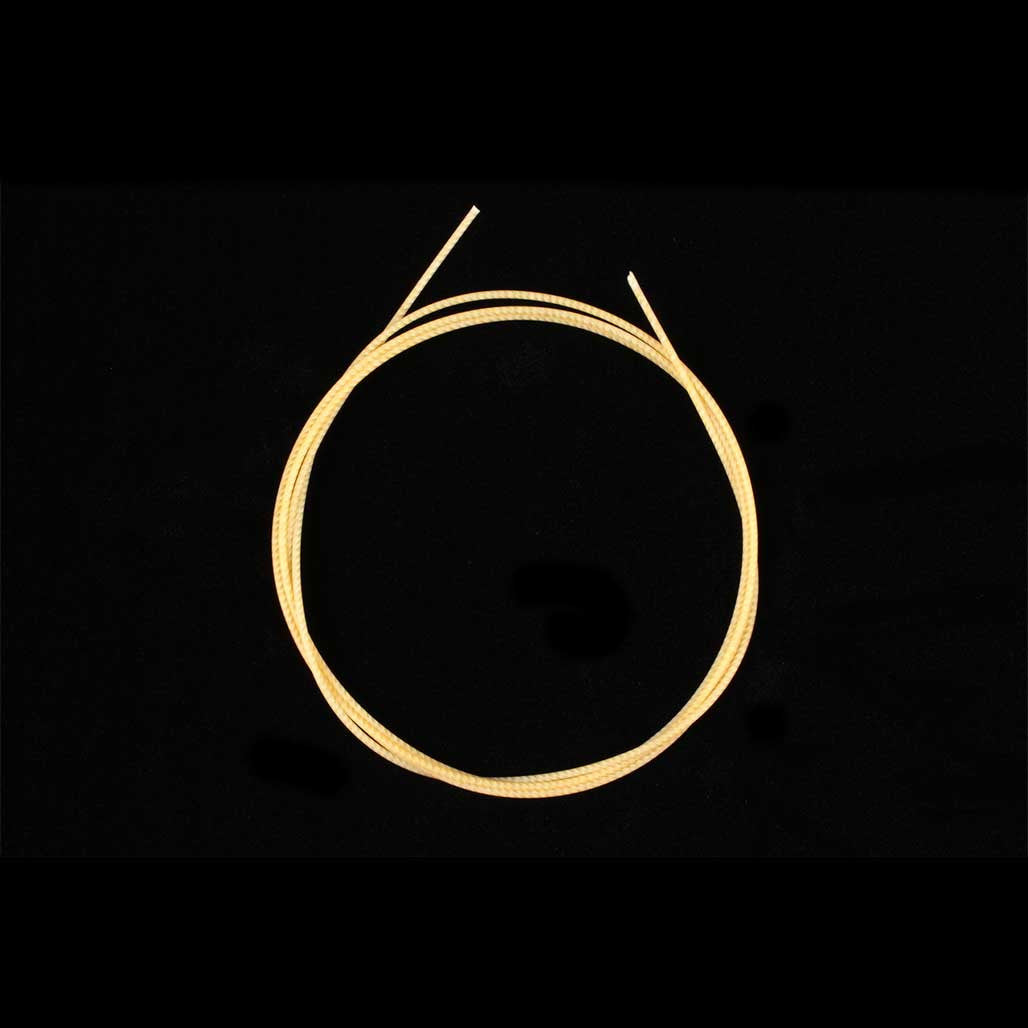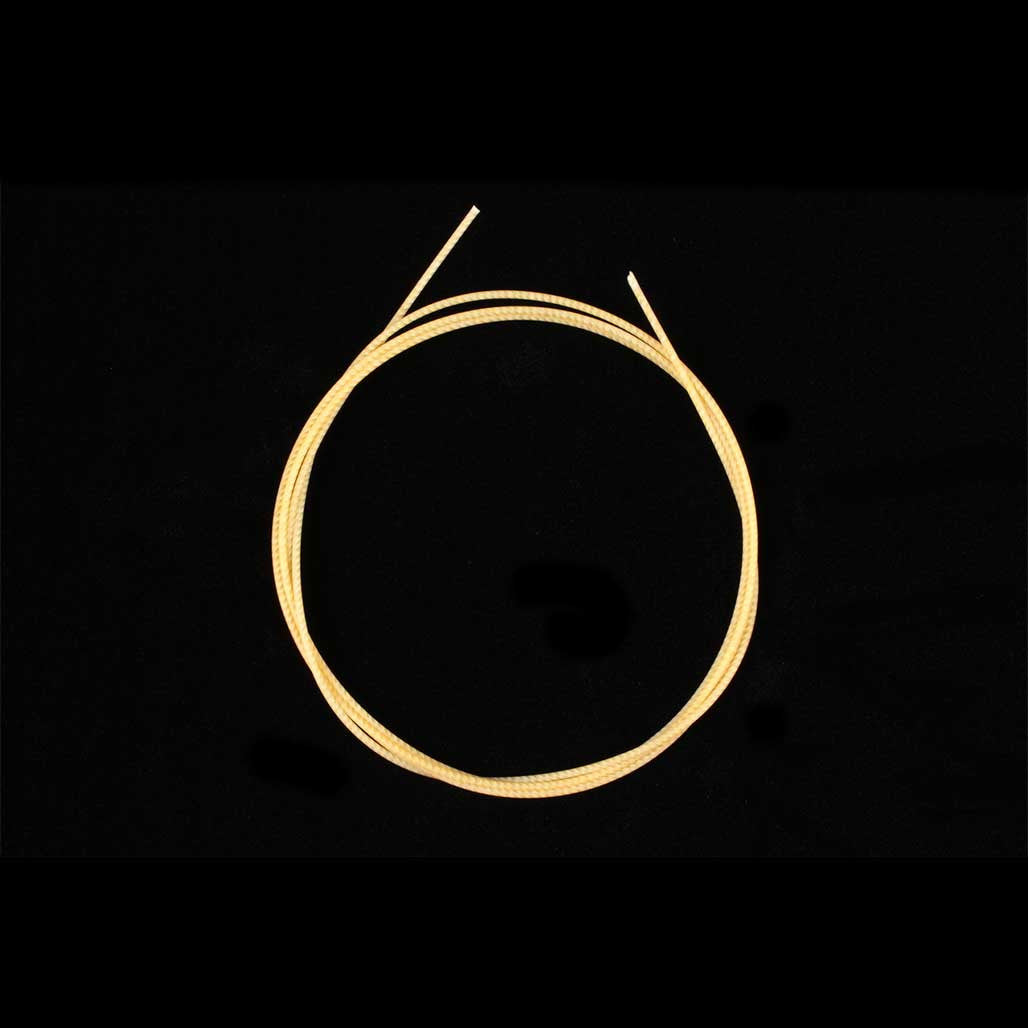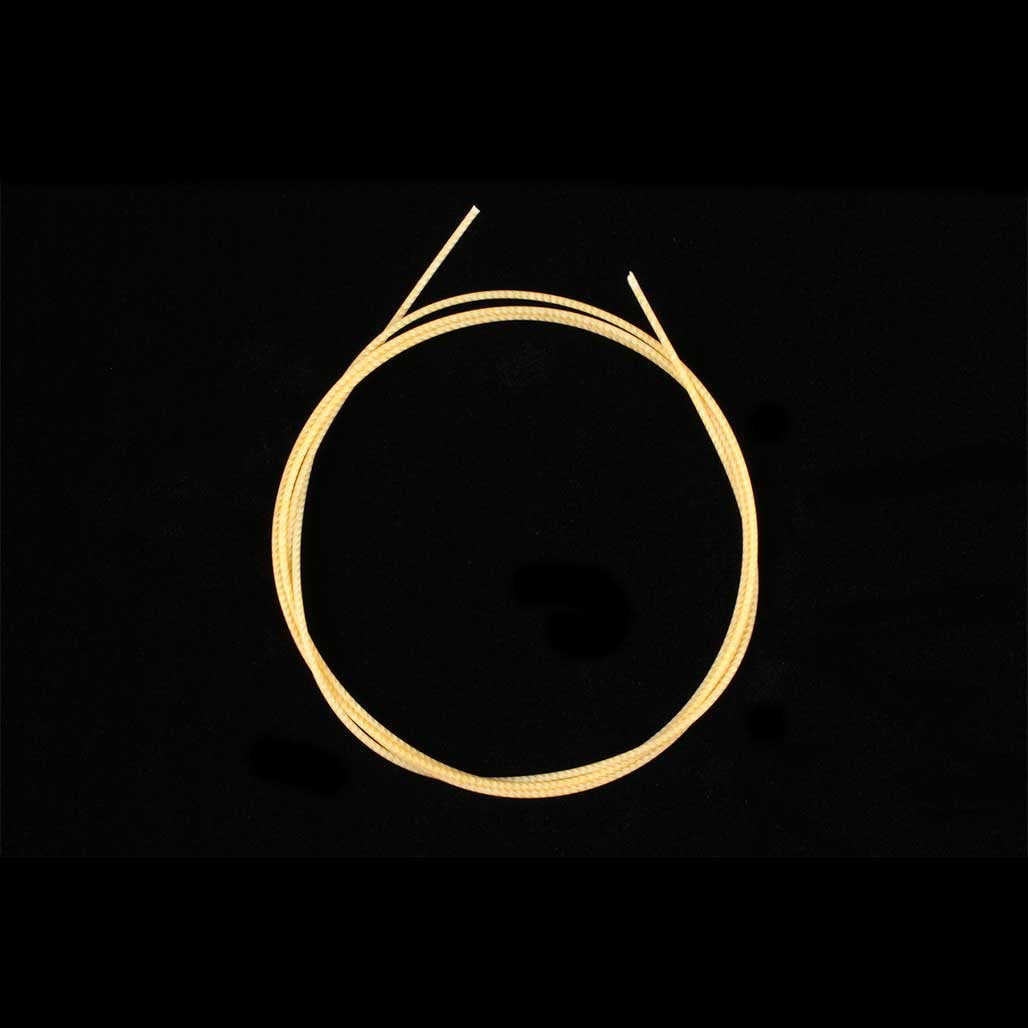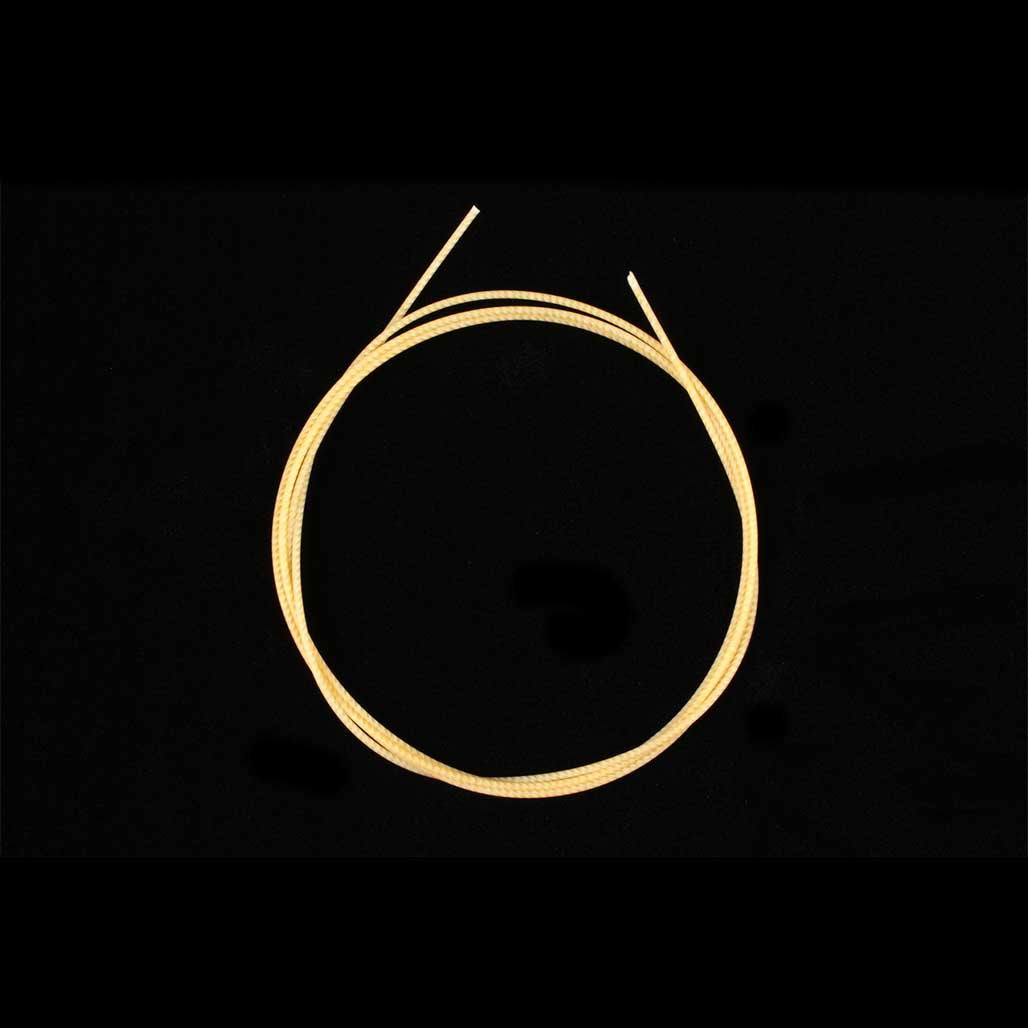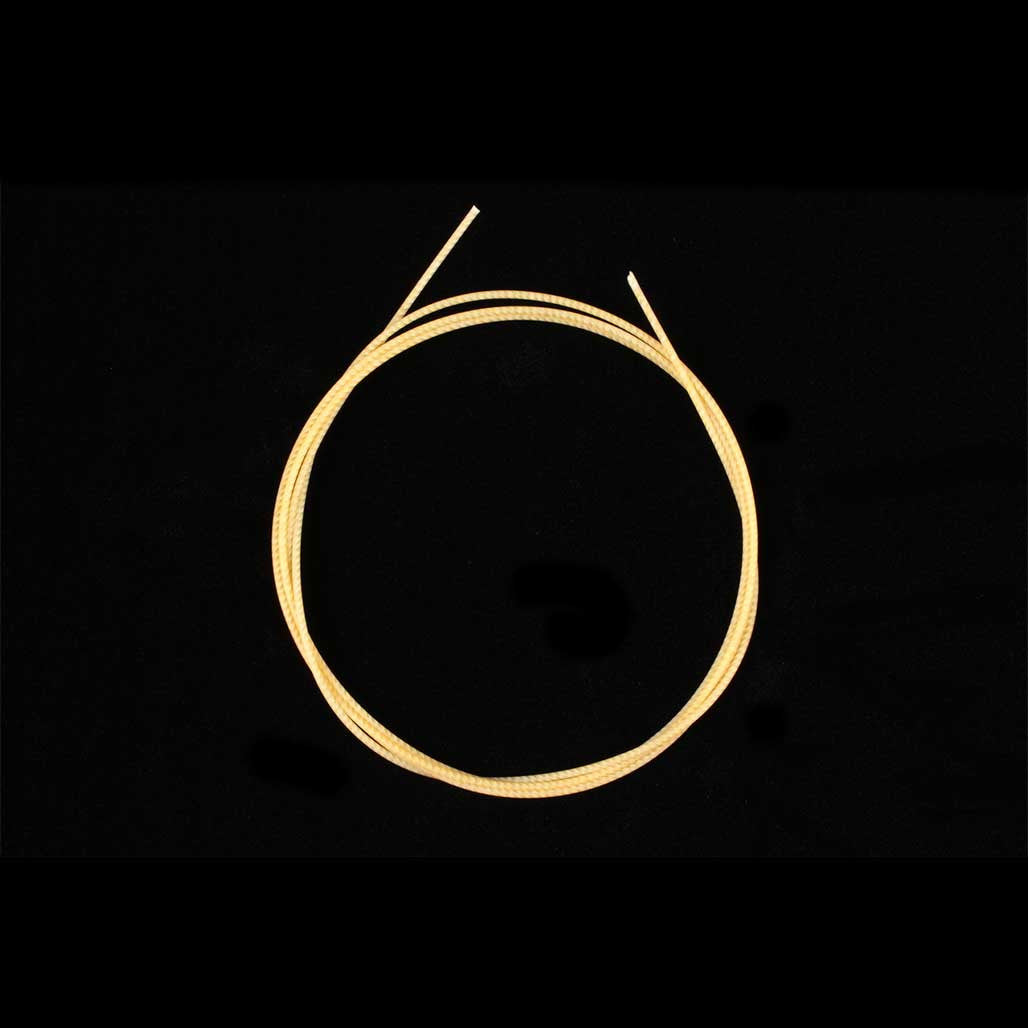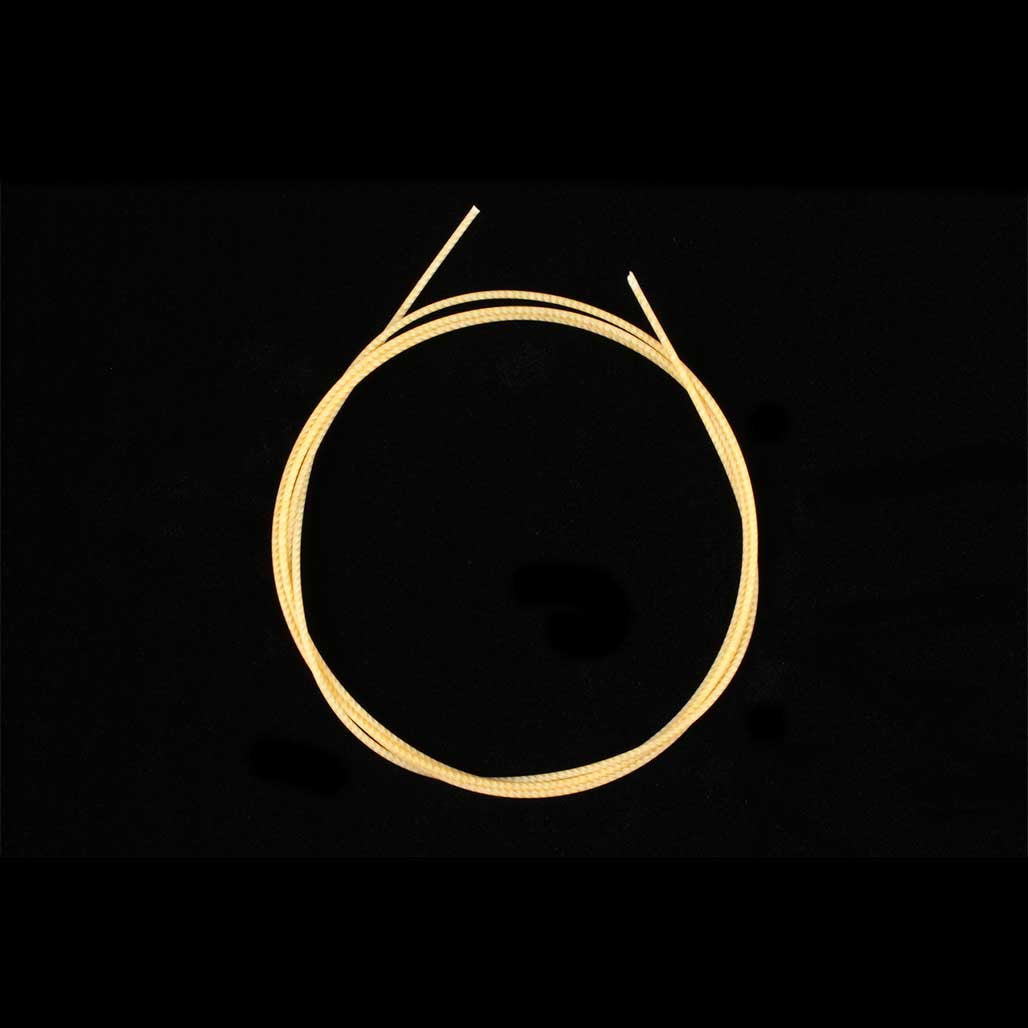
Gamut Academie Pistoy Gut is a standard-length (48"/120cm), double twist, Pistoy-style string made of beef gut (bovine serosa).
Pistoy strings are made of three strands of gut twisted in one direction, and then the three combined together by twisting in the other direction in rope fashion. The results is a very flexible string with a quick response and a full, round sound.
The string comes with plain, unknotted ends. Instructions on how to tie a string knot are on the back of each package.
Plain gut strings are available with a natural or varnish finish. Natural strings are hand-rubbed with a light oil. Varnished strings have three coats of finish before being hand-polished with the oil.
Pistoy strings have no space in the structure and therefore have the same density as any plain gut string. The Pistoy string is expensive to make because it takes a lot of time to sort the gut into small bundles to twist and retwist. The gain is in the flexibility. Even in thick gauges the string remains supple and responsive. The color ranges from clear white on thinner strings to opaque yellow on thicker strings.
The Pistoy string is a unique development of Daniel Larson at Gamut Music. It is named for the town in Italy which was famous for producing the best string for basses, being "flexible, smooth, and well twisted." This is not a polished catline as some think. At first glance this might look like such a thing. However, the Pistoy is fundamentally a different kind of string. It shares one trait with the catline in that the string is made with two directions of twists.
Pistoy strings are an ideal use for:
- Violin: D-3, G-4
- Viola: G-3, C-4
- Cello: d-2, G-3, C-4
- Bass Viol: C-4, G-5, D-6
- Tenor Viol: F-4, C-5, G-6
- Treble Viol: C-4, G-5, D-6
- Lute: f-4, c-5, G-6, fundamentals on bass courses
- Harp: Bass strings
Use our String Calculators to find the correct strings for your instrument. You can find Specific String Tensions here.