

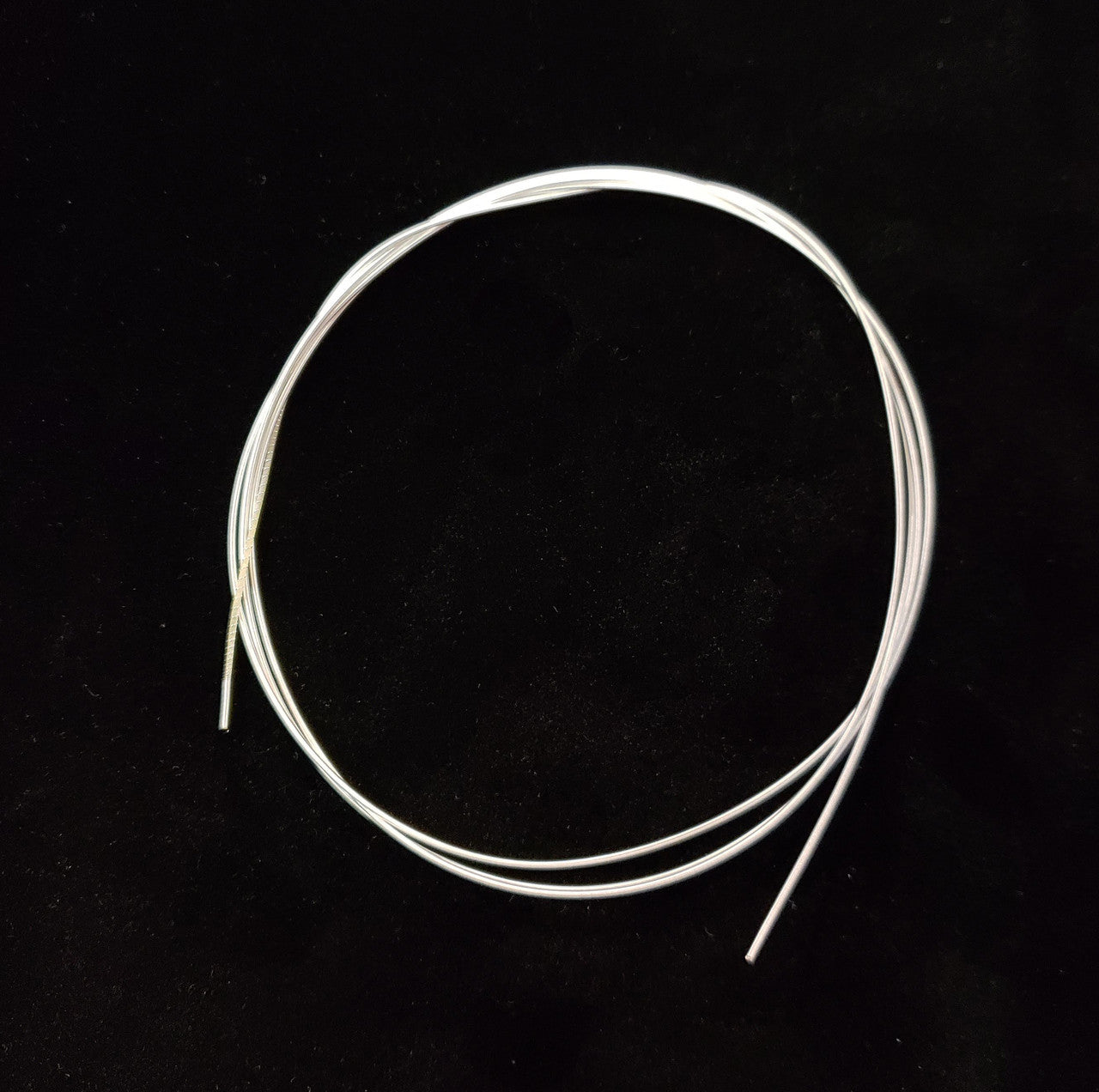

Description
-
String Length: Single-Length, 42"/106.5cm
-
String Gauge: 0.82mm
-
String Type: Gut/Metal-Wound
-
String Material: Beef Gut/Silverplate Wire
-
String Options: None
-
Tuning Designation: a=440
Gamut Academie Gut/Silverplate-Wound strings feature a gut core with silver-plated copper wire wound onto the gut in tandem with a thin silk layer between the core and the wire.
The end of the string that goes into the tailpiece comes with a 3-D Printed Ball End.
The effect of the silk underlayer is to increase the internal damping, giving the string a warmer tone. The addition of the underlayer also assists in stabilizing the string and increases its longevity.
Because of the plating, the wire is left round so that you can feel the texture of the tops of the wire. The tone is quick and bright.

Technical Considerations
The little black square in the string envelope is an anti-tarnish strip for mitigating tarnish.
All Gamut string set prices are based off of the individual string prices; there is no penalty for ordering strings à la carte.
Historical Considerations
One of the most common wires seen on historical strings is silver-plated copper. Before the advent of electroplating, wire was plated with silver through a chemical process, and there are extant strings of this type that were made for the violin family and keyboard instruments. The wire we use, like the historical examples, is left round on the core. If the wire were polished the plating would be removed.
Banjos were very popular in the United States in the late 1800s, and consequently there are lots of strings that survive for us to measure and replicate. From the ones in the Gamut String Archive, it is evident that violin strings were repurposed and relabeled as banjo strings for the first, second, third, and fifth positions, with a guitar fourth string used for the banjo fourth.
Further Reading
Banjo
Historical String-Making
Care and Cleaning of Gut Strings
String Calculator
|