




Description
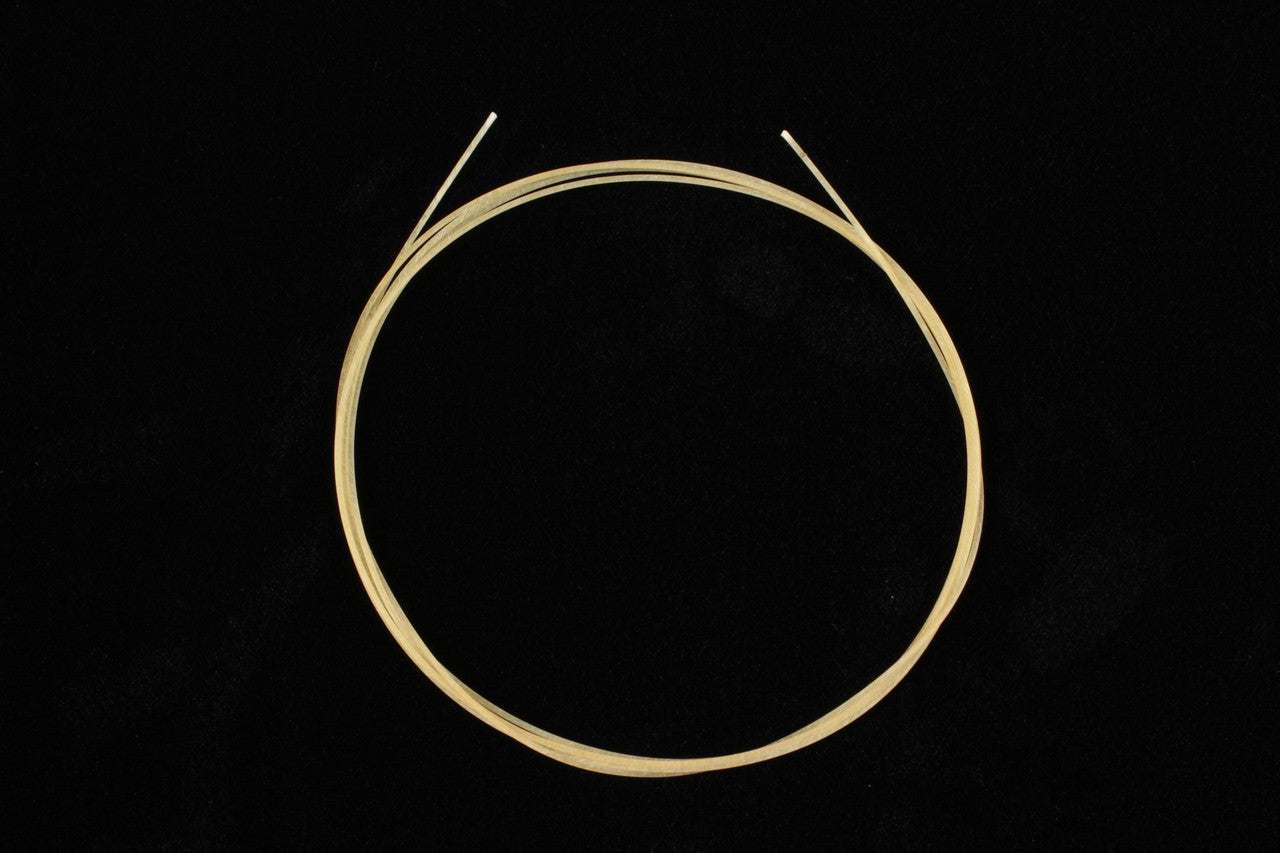
Gamut Academie Fret Gut is made of beef gut (bovine serosa) for tying frets onto early music instrument necks, such as lutes and viola da gambas.
How many frets you will get out of each length depends on how wide the neck of your instrument is, and whether you are using double or single frets.
Plain gut strings are available with a natural or varnish finish. Natural strings are hand-rubbed with a light oil. Varnished strings have three coats of finish before being hand-polished with the oil.

Fret-Tying Instructions
We offer instructions for tying lute frets and viol frets.
Technical Considerations
The usual custom for gauging frets is to have the thickest fret be the first fret — the one nearest the nut — and then have each subsequent fret decrease by 0.05mm. Using this system, the first fret on a lute would be 1.00mm, the second fret 0.95mm, the third fret 0.90mm, and so on. On most lutes the thinnest size of fret that is practical is 0.65mm, so depending on the number of tied frets required by your instrument, you may need to use one, two, or three of the 0.65 frets to complete the fretting.
Further Reading
Historical String-Making
Care and Cleaning of Gut Strings
|