

Description
| Treble Viol D-6 Gimped Gauges | |
| Light | =2.00mm |
| Medium | =2.04mm |
| Heavy | =2.08mm |
-
String Length: Single-Length, 30"/76cm
-
String Type: Gimped Gut
-
String Material: Beef Gut/Copper Wire
-
Tuning Designation: a=415
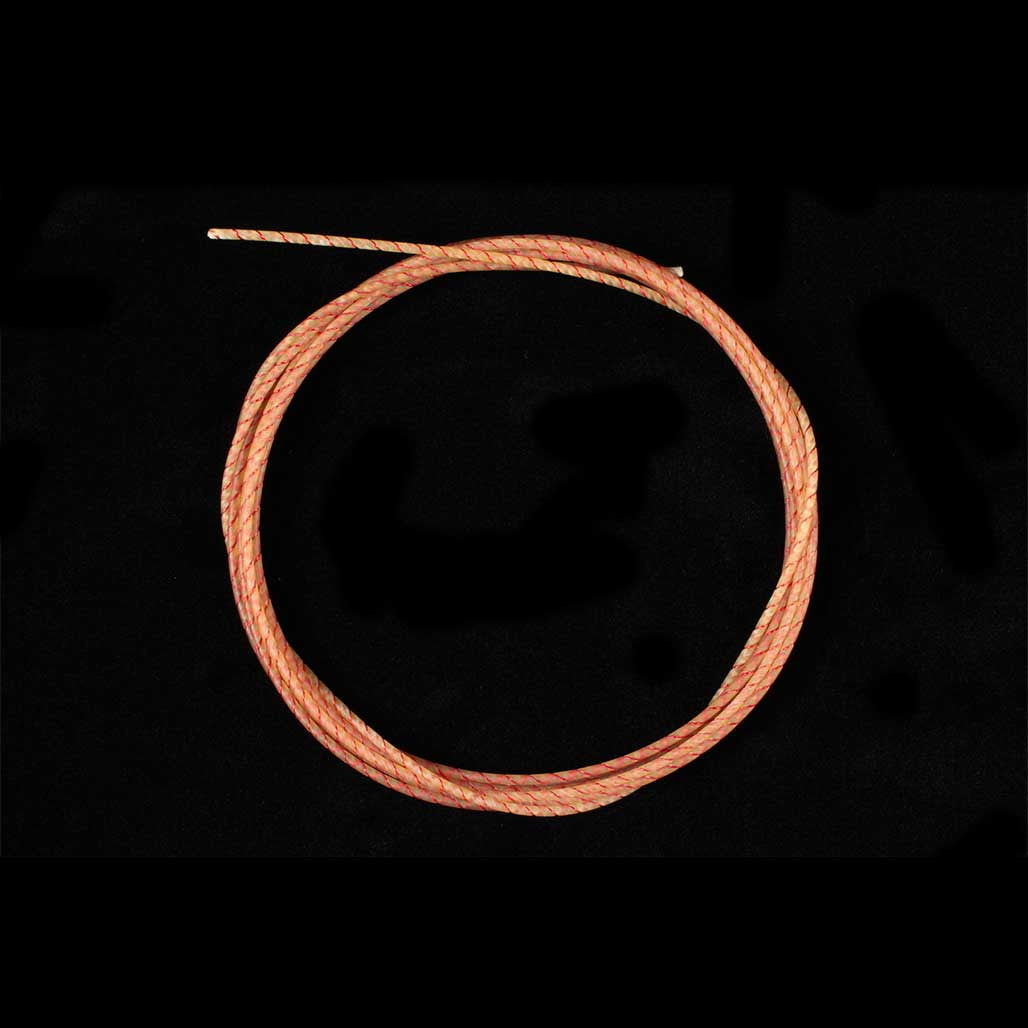
Gamut Academie Gimped Gut strings feature Pistoy-style construction with a copper wire twisted into the gut and polished smooth for extra flexibility. The Gimped string, being thinner and having some metal content, offers a brighter tone and quicker response than a plain gut string of the same gauge density. Gimped strings are characterized by a barber's pole or candy-stripe appearance of the wire in the twist of the gut.
The string comes with a plain, unknotted end. A 3-D Printed Ball End may be added for an additional charge. Instructions on how to tie a string knot are on the back of each package.
Plain gut strings are available with a natural or varnish finish. Natural strings are hand-rubbed with a light oil. Varnished strings have three coats of finish before being hand-polished with the oil.

Tuning Considerations
Gamut Academie Gut Treble Viol Strings are designed for Baroque instruments by those musicians playing historical performance practice at a=415, and are perfectly suitable for modern a=440 practice, but the result will be a little bit more tension at a=440.
Technical Considerations
Gimped strings are gauged by the Equivalent Gauge (=) system. This means that a given Gimped string is equal in weight to a plain gut string of that diameter, but because the wire is much heavier than gut, the string will be much thinner than a plain gut string.
These are our standard recommended gauges for this instrument/string. For gauges outside of this range, see our Custom Gauged Strings section.
All Gamut string set prices are based off of the individual string prices; there is no penalty for ordering strings à la carte.
Historical Considerations
Gimped strings were first mentioned in an advertisement in the 1664 edition of John Playford’s Introduction to the Skill of Music. The exact historical nature of these strings is not known, and the strings we produce are based on the descriptions of gimped lace of the period.
Further Reading
Viola da Gamba / Viols
Early Music / Historically Informed Performance
Historical String-Making
Care and Cleaning of Gut Strings
String Calculator
|