

Description
| Viola C-4 Gut/Silver/Copper Gauges | |
| Light | 1.08mm |
| Light+ | 1.10mm |
| Medium | 1.12mm |
| Medium+ | 1.14mm |
| Heavy | 1.16mm |
| Heavy+ | 1.18mm |
-
String Length: Single-Length, 25.5"/65cm; Knot to Stocking, 19.5"/49.5cm; Stocking, 6"/15cm
-
String Type: Gut/Metal-Wound
-
String Material: Beef Gut/Silver and Copper Wire
-
String Options: Underlayer, Polished
-
Tuning Designation: a=415
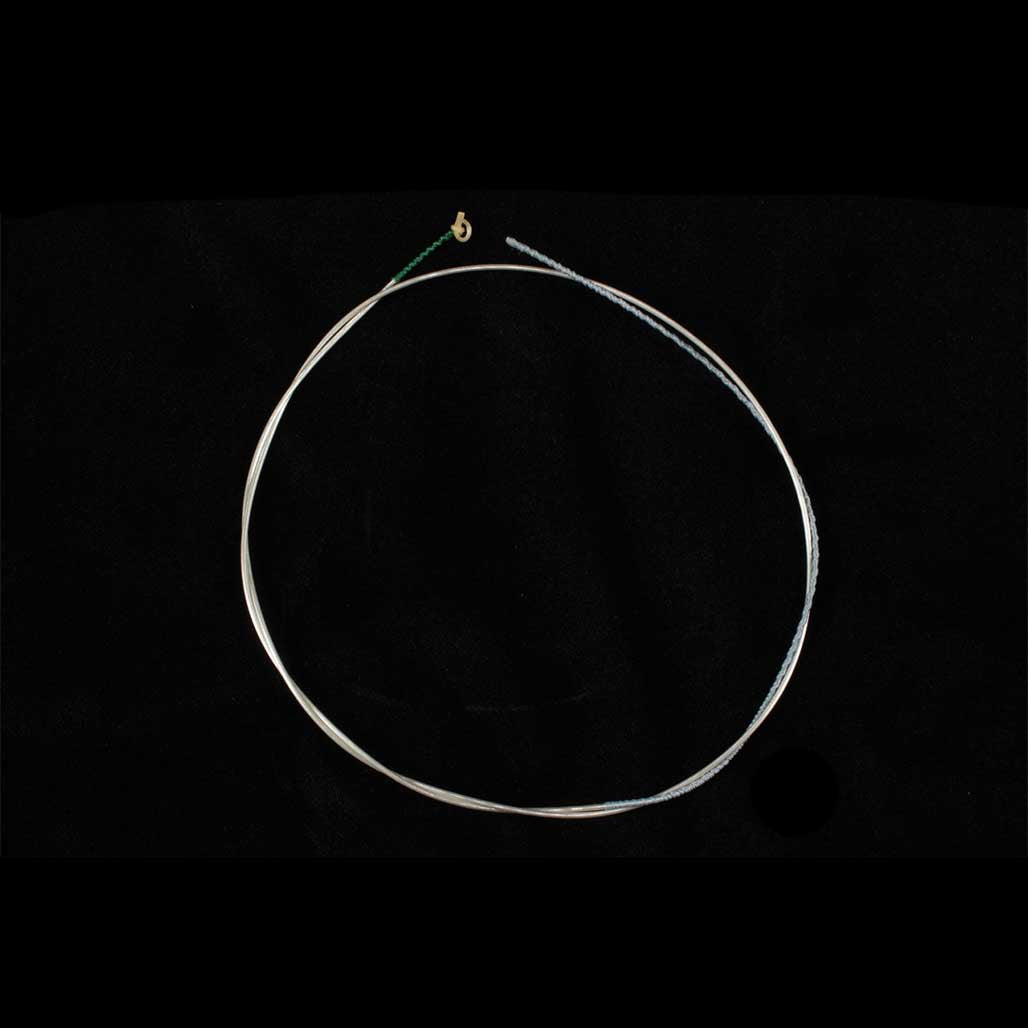
Gamut Academie Gut/Silver/Copper-Wound strings feature a gut core with sterling silver and copper wire wound onto the gut in tandem with a thin silk layer between the core and the wire.
The end of the string that goes into the tailpiece comes with a 3-D Printed Ball End.
The effect of the silk underlayer is to increase the internal damping, giving the string a warmer tone. The addition of the underlayer also assists in stabilizing the string and increases its longevity.
Because the wire is round, the surface of the wire is polished so that the string has a smooth, "half-wound" feel. The tone is warm and full. Silver/copper-wound strings are also available unpolished (round wire).

Tuning Considerations
Gamut Academie Gut Viola Strings are designed for Baroque instruments by those musicians playing historical performance practice at a=415, and are perfectly suitable for modern a=440 practice, but the result will be a little bit more tension at a=440.
Technical Considerations
Since the speed of sound is faster in copper than it is in silver, the copper wire lends a little brightness to the tone of these strings making the silver/copper-wound string a good choice for an instrument that has a dark, lower register, or if you just want to try a new tone on your instrument.
The little black square in the string envelope is an anti-tarnish strip for mitigating tarnish.
All Gamut string set prices are based off of the individual string prices; there is no penalty for ordering strings à la carte.
Historical Considerations
This type of string is represented by several extant samples of strings from the early 1800s that were made for the violin and cello. The copper and silver wires are laid onto the gut core in tandem creating a striped barber's pole effect if the string is looked at closely.
Without the silk underlayer, the tone of the string is brighter and has more of the lush, ravishing tone attributed to historical times. According to our research, it is unlikely that an underlayer would have been used on wound music strings before about 1900 — and for those players who want to explore the true nature of historical strings, we offer these strings without this buffer layer.
Further Reading
Viola (Baroque, Classical)
Early Music / Historically Informed Performance
Historical String-Making
Care and Cleaning of Gut Strings
String Calculator
|